



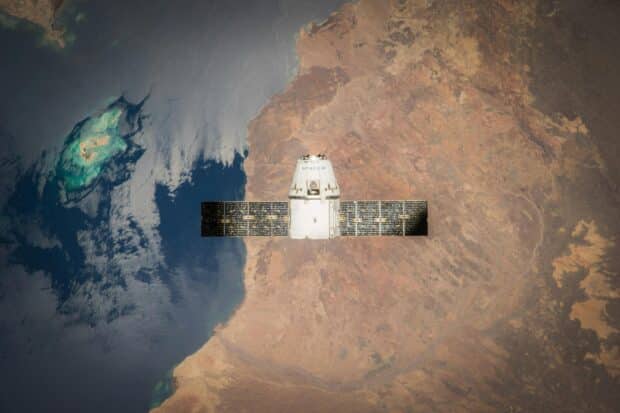
Useless zone no extra. The DICT has just lately unveiled its groundbreaking partnership between Globe and Starlink, permitting orginary LTE cell phones entry to calls, textual content, and cellular knowledge with out the usage of cell towers. Subscribers will now be capable of entry community connectivity by means of Starlink’s 650 low-earth orbit satellites.
By way of this next-generation expertise, bizarre LTE cell phones will be capable of entry voice, knowledge, video, and messaging companies straight from area, eliminating the necessity for brand spanking new units or ground-based infrastructure. Powered by greater than 650 low-Earth orbit satellites, Starlink’s community successfully turns every satellite tv for pc right into a “cell tower in area,” utilizing superior phased-array antennas and laser-linked programs to combine with current cellular networks seamlessly. [source DICT Website]
This new growth ushers in a brand new period of catastrophe preparedness and resilience. With the nation experiencing an common of twenty tropical cyclones yearly, communications infrastructure for aid stays weak. With this new satellite-to-phone expertise, sign won’t ever be misplaced as a consequence of infrastructure harm.
“This partnership will usher the Philippines into a brand new period of connectivity, particularly for our unserved and underserved communities, and might be important in instances of disasters when communication can imply the distinction between life and dying,” mentioned DICT Secretary Henry Aguda. “We’ll proceed to assist and welcome investments that develop entry and be certain that no Filipino is left behind within the digital age.”
Alongside Indonesia, the nation has been recognized as a key market within the rollout of satellite-enabled 4G/LTE connectivity, positioning the Philippines as a important testbed for the place cellular networks merely can’t attain at this time. Preliminary testing and proof-of-concept deployments are anticipated within the first half of 2026, with a transparent give attention to distant islands, mountainous areas, and disaster-prone areas that stay outdoors the footprint of conventional cell towers.
What makes this growth notably important is Globe’s USD 1.0 billion funding and its current base of 63.1 million subscribers. That scale turns satellite-to-cell connectivity from a theoretical future characteristic into one thing much more tangible. If profitable, this might reshape how connectivity works in hard-to-reach communities—unlocking new prospects for training, native commerce, emergency response, and primary day-to-day communication the place sign has traditionally been unreliable or nonexistent.
Globally, these Direct-to-Cell companies are already gaining traction. Main cellular operators in the US, Australia, Canada, New Zealand, Japan, Switzerland, Chile, Peru, Ukraine, and the UK have begun adopting comparable applied sciences. The Philippines now joins that rising checklist.

