


“Once I was rising up, this entire space of Paris was leather-based and fur,” says Yves Salomon, head of the eponymous model and producer. “We’re buried on this little avenue, Cité Paradis, however throughout us it was nothing however animal manufacturing – on Rue d’Hauteville and Rue des Petites Écuries. Now we’re the one one left.
“I keep in mind first strolling down these streets with my father after I was younger, and I hated it. These males with skins piled on high of their shoulders, leather-based all over the place. I by no means needed to work on this trade.”
We’re interviewing Yves within the firm’s fairly nameless, trendy workplaces, sitting on the primary ground trying down on Cité Paradis. We’ve lengthy been a fan of the work Yves Salomon does in its London atelier, and so they’ve made two items for me prior to now. However that is our first go to to Paris, to the HQ.

“My son wasn’t so eager firstly both,” Yves continues. “However if you’ve labored round this craft lengthy sufficient, you grow to be enthusiastic about the great thing about it and preserving it. That’s what occurred to me, and Thomas feels the identical means now as effectively.”
The corporate was based in 1920 as a producer by Gregory Salomon, Yves’s grandfather. His father, Boris, started experimenting with alternative ways of utilizing fur within the Nineteen Sixties and drew the eye of the style homes.
Within the Nineteen Eighties Yves took over and actually pushed that ahead – working for the likes of Azzedine Alaïa, Nina Ricci, Thierry Mugler, Jean Paul Gaultier – earlier than establishing his personal model.
In a while within the day we meet Thomas, who’s deep into shows for Style Week. He’s helped steer the model into full collections, with a lot of leather-based items (all of which the corporate makes in-house) after which trousers, knits and shirts round them.

Most of Yves Salomon’s work with fur today entails re-using previous items, with clients bringing of their grandmothers’ coats and having them re-cut into one thing extra trendy. Fur lasts very effectively, and the historic worth of those coats means they’ve typically been saved for generations. From that perspective they’re among the many most sustainable clothes.
The final piece I had made was a liner for a raincoat, solely fabricated from the offcuts from such work within the London atelier. It’s wonderful what an expensive piece could be made out of literal scraps – on the identical high quality as one thing new, not like the degrading that occurs with recycled wool for instance.
In Paris, we noticed the grasp of this work, a senior craftsman who was patiently working in a single nook of the basement workshop. “He’s the very best there may be, he blends the skins collectively in an fantastic means,” says Yves.
It was definitely spectacular once we checked out each the again and the entrance of those coats (above). On the entrance the skins had been blended so successfully that they appeared like lengthy strips of a single materials. Every one runs easily into the following, thanks to shut matching of the colors and cautious slicing of the seams.
On the again you possibly can see how difficult these seams are, with both sides minimize into lengthy spikes that match into one another, and typically cuts in these as effectively (beneath).

“The important thing to discovering new methods to make use of fur within the early days was to attempt to use it as a cloth,” says Yves. That included shaving down the fur so it appeared extra like velvet, and even moleskin. They’d additionally use laser cutters to make patterns within the floor.
Extra just lately, the corporate has developed strategies for slicing lengthy traces in these intently shaved items, in order that they appear like corduroy. One piece we noticed (pictured increased up) seems like a reasonably common jean jacket in black wire, however the floor is extremely mushy – not what you count on.
“One thing else we got here up with was a really light-weight fur piece utilizing strips of organza,” says Yves, choosing up a coat a employee is ending (beneath). The fabric is made up of alternating strips of organza and fur, however the strips are so skinny (and the hair so lengthy) that from the surface it simply seems like fur, but may be very light-weight.

“Many of those improvements had been pushed by the calls for of the designers,” says Yves. “Jean-Paul Gaulthier was the worst for this – he would ask us to do issues that we had been completely not capable of. do Like stretch fur for instance – he needed to do his traditional mariniere [sweater] however fully fitted to the physique.
“I’d say I didn’t know the way to do this, it doesn’t exist, and he’d say ‘simply do it’! We discovered methods to do one thing shut, after which we moved into knitted fur too. Quickly after we did our most well-known piece as a model – the classic parka with fur lining.”
Yves Salomon did grow to be well-known for this as a way, and has had variations going by way of its collections ever since. “The issue initially was that the items had been for ladies, and the sleeves on the coats had been too lengthy. So we thought we’d should make them ourselves. However then we discovered most of them had been being purchased by males and that had the alternative drawback – the sleeves had been too brief!
“That was how we began doing garments for males as effectively. That was in 2013.”
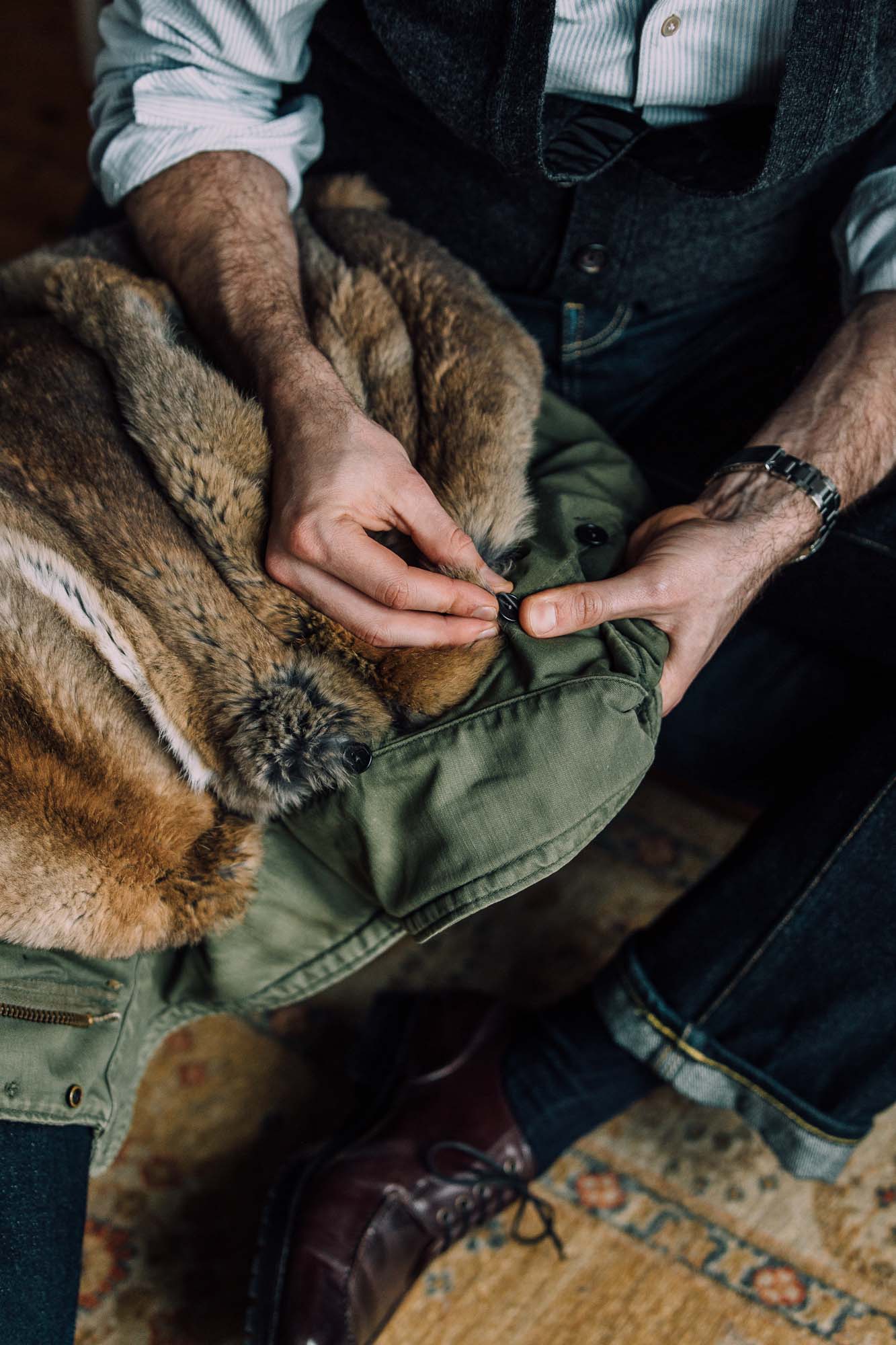
Quickly after that the strain on fur usually turned larger, with a variety of designer manufacturers ceasing to make use of it. So Yves began the method of diversifying – into leather-based, shearling, knitwear – in addition to focusing extra on re-using and re-modelling previous items.
Our go to looks like the top of a protracted arc for the corporate, as they did their first presentation of the complete males’s assortment simply the day earlier than. It’s taken over 100 years, however you’re feeling the constant, regular journey nonetheless.
“That is simply me, my private tradition (and my employees endure quite a bit for it) however I don’t like ever to remain on the identical factor. I wish to maintain transferring,” says Yves.

I’ve to say, it was this perspective in the direction of innovation that impressed us most at Yves Salomon. Fantastic because the merchandise and the methods are, it was the perspective that actually set it other than the producers we usually cowl for Everlasting Fashion.
Most of these are extremely conservative, and resist comparatively small adjustments like making unlined sneakers, or new varieties of rubber soles. Typically they are often restricted by abilities or equipment, however typically you’re feeling there’s an instinctive worry too – regardless of what number of occasions they’ve needed to change prior to now, they don’t wish to achieve this once more till they’re compelled to take action.
Will probably be attention-grabbing to see how the method of Yves Salomon carries throughout into leather-based going ahead. Yves himself defined a current innovation the place they use the thinnest calf doable for outerwear – 2mm – backed with nylon for the entire coat, so it may be reversed and worn both means, whether or not for vogue or climate.
After we then went to see Thomas later on the showroom, in the midst of a number of bustling appointments, we tried on that coat and it was simply stunning. As fur turns into more and more area of interest, I look ahead to seeing what Yves Salomon (the person and the corporate) does with leather-based as effectively.
For extra on fur, its ethics and sustainability, see PS article right here. The factors on this problem are all made there, whether or not within the article or the feedback, so please add to that debate reasonably than replicating them right here.
The present Yves Spring/Summer season assortment could be seen on their web site. Beneath are some highlights of the Autumn/Winter.


