



Once I first began exploring thoughts mapping software program, it wasn’t nearly discovering instruments to prepare my ideas—I wanted options to remodel chaotic concepts into structured plans.
Over time, I’ve relied on a number of the greatest thoughts mapping software program to plan campaigns, define long-form content material, and strategize for workforce initiatives. Some fell quick, providing clunky interfaces or restricted performance, whereas others exceeded expectations with intuitive designs and strong options.
To actually perceive what completely different thoughts mapping instruments provide, I evaluated over 25 choices to evaluate their usability, options, and total worth. From establishing workforce brainstorming classes to creating detailed challenge blueprints, I’ve examined and used completely different thoughts mapping software program in my each day work to see how they carry out underneath completely different calls for.
After a number of weeks of use, I’ve finalized my prime ten options that actually stand out.
10 greatest thoughts mapping software program for 2025: My prime picks
-
Miro: Greatest for collaborative brainstorming and visible planning
Helps real-time teamwork, workflow mapping, and concept visualization ($8/consumer/month) -
ClickUp: Greatest for centralized challenge administration and job monitoring
Combines job dependencies, automation, and workflow integrations in a single place ($7/consumer/month) -
Lucid Visible Collaboration Suite: Greatest for visualizing complicated methods
Permits groups to construct flowcharts, technical diagrams, and align visually ($13.50/consumer/month) -
FigJam: Greatest for interactive ideation and inventive collaboration
Encourages brainstorming, sketching, and workforce engagement in an intuitive workspace ($15/consumer/month) -
Mural: Greatest for agile planning and workforce collaboration
Facilitates design sprints, retrospectives, and collaborative workshops ($9.99/consumer/month) -
Padlet: Greatest for sharing multimedia-rich concept boards
Gives an easy-to-use house for visible storytelling and inventive sharing ($9.99/consumer/month) -
Freehand: Greatest for visible suggestions and real-time design evaluate
Streamlines collaboration with interactive boards and fast annotation instruments
($8/consumer/month) -
Gliffy: Greatest for structured diagramming {and professional} charts
Perfect for creating org charts, community diagrams, and UML fashions($8/consumer/month) -
Klaxoon: Greatest for operating interactive conferences and workshops
Drives participation by way of templates, quizzes, and visible engagement instruments
($24.90/consumer/month) -
Visio: Greatest for enterprise-grade course of documentation
Offers superior instruments for mapping workflows and visualizing organizational methods ($15/consumer/month)
* These thoughts mapping instruments are top-rated of their class, in response to G2’s Winter 2025 Grid Report. I’ve additionally added their month-to-month pricing for simpler comparability.
10 greatest thoughts mapping software program I examined (and liked)
Once I take into consideration mind-mapping software program, I see it as my go-to device for organising ideas, brainstorming concepts, and visually structuring info. It’s a digital technique to create thoughts maps — diagrams that department out like a tree, connecting concepts, duties, or ideas in a transparent and visible format.
The worldwide mind-mapping software program market is gaining momentum as visible collaboration turns into a core a part of distant and hybrid work. One current estimate forecasts it to attain roughly $5.2 billion by 2032.
As an alternative of scribbling on paper, I take advantage of these instruments to rapidly map out the whole lot from content material plans to non-public initiatives. They assist me see connections, prioritise duties, and switch scattered concepts into actionable plans—all whereas retaining issues visually participating and straightforward to navigate.
Whether or not you’re a visible thinker, a challenge supervisor, or simply somebody trying to organise your ideas extra successfully, I hope my firsthand perspective will show you how to discover the proper device to your wants.
How did I discover and consider one of the best thoughts mapping software program?
When compiling this record, I aimed to transcend surface-level analysis and totally consider every device. I started by figuring out the highest thoughts mapping software program based mostly on G2 grid stories and consumer evaluations. I spent a number of months testing completely different instruments, specializing in their ease of use, performance, customization choices, and collaboration options. I spent hours mapping out precise workflows, creating templates for content material technique, and simulating workforce collaboration to see how every device carried out.
This hands-on strategy helped me perceive their strengths and weaknesses and establish which instruments would work greatest for several types of customers and situations. My aim was to chop by way of the noise and convey a listing of genuinely useful thoughts mapping software program backed by my expertise.
I additionally utilized AI to investigate product evaluations on G2, delving into the actual wants, motivations, and ache factors of precise customers. On prime of that, I checked out G2’s Grid Experiences to see how these thoughts mapping software program examine. In instances the place I couldn’t personally take a look at a device on account of restricted entry, I consulted an expert with hands-on expertise and validated their insights utilizing verified G2 evaluations. The screenshots featured on this article could also be a mixture of these captured throughout testing and ones obtained from the seller’s G2 web page.
What makes a thoughts mapping device price it? My take
For me, a thoughts mapping device is price investing time (and typically cash) into if it checks just a few important containers. Right here’s what I prioritized whereas evaluating these instruments:
- Ease of use: A thoughts mapping device must be intuitive and user-friendly. If I must spend hours determining how you can add nodes or rearrange branches, it’s already misplaced me. Simplicity is essential, particularly when making an attempt to get concepts down rapidly.
- Customization: Each challenge is completely different, and I would like a device that lets me alter colours, layouts, and codecs to suit the duty. Whether or not it’s a visual-heavy thoughts map for a presentation or a simple flowchart for inside use, flexibility is non-negotiable.
- Collaboration: A lot of my initiatives contain groups, so instruments that make it straightforward to share thoughts maps, add feedback, or collaborate in real-time get a serious thumbs up. A shared visible house fosters creativity and retains everybody aligned.
- Cross-platform accessibility: I don’t all the time work from the identical gadget, so I desire instruments which can be cloud-based or provide seamless syncing between desktop, cellular, and internet variations. This ensures I can choose up the place I left off, regardless of the place I’m.
- Worth for cash: Some instruments provide free plans with strong options, whereas others cost a premium for fundamental capabilities. I ensured that to weighed the fee towards the worth delivered. If a free device does the whole lot I would like, it’s a win. For paid instruments, they higher justify the funding with superior options or a superior consumer expertise.
These elements guided my course of and helped separate a “nice-to-have” device from a real productiveness enhancer. Whether or not you’re mapping out complicated workflows, simplifying note-taking, or collaborating with a workforce, my record of greatest thoughts mapping software program comprises choices that cater to varied wants and budgets.
To be included on this record, an answer should:
- Provide customers an open, editable workspace
- Present customers with instruments to file concepts and draw relationships between them in a diagram format
- Permit customers to avoid wasting and share their thoughts maps
- Particularly and deliberately facilitate the creation of thoughts maps
*This knowledge was pulled from G2 in 2025. Some evaluations might have been edited for readability.
1. Miro: Greatest for collaborative brainstorming and visible planning
Once I first tried Miro, I knew it was greater than only a thoughts mapping device—it’s a full-fledged visible collaboration platform. Whereas its versatility can initially really feel overwhelming, it rapidly turns into a bonus when you discover its intensive options.
The thoughts mapping performance is glossy and intuitive. It gives drag-and-drop ease, pre-built templates, and an infinite canvas house that lets you broaden your concepts with out limits. In keeping with G2 Information, 91% customers worth its drag-and-drop function.
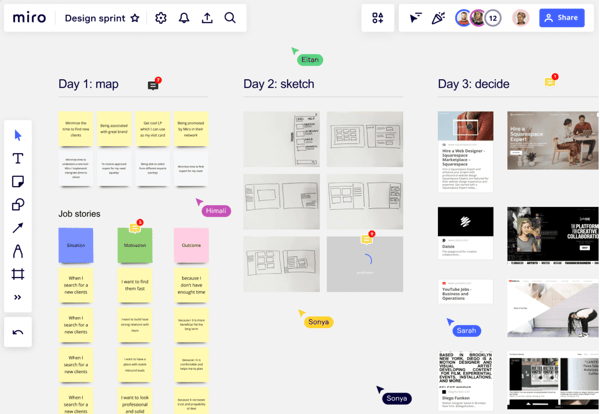
One factor that units Miro aside for me is its give attention to collaboration. Groups can work collectively in actual time, leaving feedback, voting on concepts, or chatting straight throughout the platform. This makes it a wonderful selection for distant brainstorming classes or workshops. Its integrations with instruments like Slack, Asana, and Jira imply you’ll be able to simply join your thoughts maps to broader workflows.
Whereas Miro’s free plan is beneficiant, providing limitless workforce members and as much as three editable boards, its premium plans unlock superior options, resembling personal boards and customized templates.
Miro gives unimaginable flexibility and collaboration options that make brainstorming and planning really feel seamless. Nonetheless, the expertise isn’t with out its challenges. The platform’s intensive function set comes with a steeper studying curve than I anticipated, particularly after I was simply in search of one thing easy.
I additionally observed that bigger or extra complicated boards could cause occasional efficiency lags, which may break focus throughout a session. And since Miro depends upon a gradual web connection, working offline feels limiting.
That stated, I in the end discovered the training curve price it. When you get comfy, Miro’s versatility actually shines; It adapts to the whole lot from private concept mapping to full-scale workforce initiatives, making it probably the most highly effective and collaborative instruments I’ve used for visible planning.
What I like about Miro:
- Miro actually excels to teamwork. I liked utilizing options like real-time modifying, remark threads, and straightforward sharing, which made it splendid for group initiatives.
- The library of pre-built templates saved me time when establishing thoughts maps, and I appreciated how customizable the method was.
- The integrations with different instruments I take advantage of have been additionally seamless.
What G2 customers like about Miro:
“Miro is a unbelievable device for visually mapping complicated concepts and workflows. I’ve been utilizing it to stipulate campaigns and ebooks, and it’s been a game-changer for readability and collaboration. The power to create dynamic, interactive boards helps visualize the circulate from begin to end, making it straightforward to identify gaps or optimize methods. Its user-friendly interface and versatile templates save time whereas providing artistic flexibility.
Whether or not working solo or as a part of a workforce, Miro is a useful useful resource for brainstorming, organizing, and presenting concepts. Extremely advocate for anybody needing a strong visualization device!”
– Miro Overview, Bec J.
What I dislike about Miro:
- I noticed in G2 evaluations that Miro is comparatively user-friendly, however there’s nonetheless a little bit of a studying curve concerning extra superior options.
- The free model is sort of restricted for greater groups, so upgrading to a paid plan may grow to be mandatory. Many customers point out it is well worth the improve.
What G2 customers dislike about Miro:
“I want to see extra protocol templates within the free model. When you can copy and paste textual content simply, it will be nice to format protocols with a premade template straight on the board. Buyer assist within the free model can also be not complete, solely accessible to paid members.”
– Miro Overview, Kathryn L.
2. ClickUp: Greatest for centralized challenge administration and job monitoring
ClickUp’s complete platform integrates thoughts mapping with challenge administration, making it a strong selection for groups that want each planning and execution in a single place. I discovered its thoughts mapping function extremely versatile, particularly for visualizing initiatives inside broader workflows.

What stood out for me was ClickUp’s potential to mix thoughts mapping with detailed challenge administration instruments. You may create a thoughts map to brainstorm concepts, seamlessly transition into job creation, set deadlines, and assign duties, all throughout the similar platform. It’s good for turning brainstorming classes into concrete plans with out switching between completely different instruments.
ClickUp additionally excels with its customization choices. I may alter the whole lot from a map’s look to how info is displayed, making certain that my thoughts maps match my workforce’s fashion. As well as, its collaboration options are top-notch, providing real-time modifying, job feedback, and doc sharing to maintain everybody aligned.
Nonetheless, the expertise isn’t with out its challenges. The sheer variety of options was initially overwhelming, and it took me a while to grow to be comfy navigating the whole lot. Though I appreciated the customization, setting all of it up was tedious, particularly after I needed to get begin rapidly. I additionally encountered some efficiency hiccups when engaged on bigger, extra complicated maps. They appeared to decelerate the platform.
Regardless of these challenges, I discovered ClickUp’s potential to mix brainstorming with execution extremely useful. It’s a device I’d advocate for anybody who wants a flexible, all-in-one resolution for workforce initiatives.
What I like about ClickUp:
- ClickUp gave me a whole lot of management to create extremely customized thoughts maps to suit particular workflows.
- As a remote-first workforce, I appreciated ClickUp’s real-time collaboration and talent to tag my workforce members in maps.
- ClickUp’s energy lies in its integration with thoughts mapping and different productiveness and challenge administration instruments.
What G2 customers like about ClickUp:
“ClickUp is an all-in-one challenge administration device with all of the options wanted for the whole Product Improvement in a single place. The perfect-in-class buyer assist helps to unravel all the problems on time. Integration with different platforms helps to achieve migration from different platforms extra simply, and the AI function can summarise and generate the duty description, which helps builders perceive extra in regards to the job.”
– ClickUp Overview, Dharmesh Okay.
What I dislike about ClickUp:
- ClickUp’s thoughts mapping function seems to be a useful add-on inside its complete challenge administration ecosystem. I observed G2 customers point out that it doesn’t really feel as polished or intuitive as devoted mind-mapping instruments.
- The sheer variety of customization choices and settings also can sluggish issues down while you simply wish to sketch out a fast concept. Nonetheless, I observed that many G2 customers admire having thoughts mapping constructed straight right into a platform.
What G2 customers dislike about ClickUp:
“There are too many bugs, even on the enterprise plan. You work together with many individuals from buyer assist, and assist does not care. Many bugs will likely be confirmed as unattended conduct, however it’ll take weeks or months for they to be solved, even for important bugs. Additionally, the truth that it’s pushing to a one-in resolution implies that the whole lot is there, however nothing is admittedly “industry-leading” itself.”
– ClickUp Overview, Enrico Luca Okay.
3. Lucid Visible Collaboration Suite: Greatest for visualizing complicated methods
Lucid’s Visible Collaboration Suite is a strong device designed for groups to brainstorm, plan, and execute initiatives in a visible format.
I used to be significantly impressed by how seamlessly it integrates thoughts mapping with different sorts of visible collaboration, resembling flowcharts and course of diagrams. This multifaceted strategy makes it good for groups searching for a complete device past thoughts mapping.
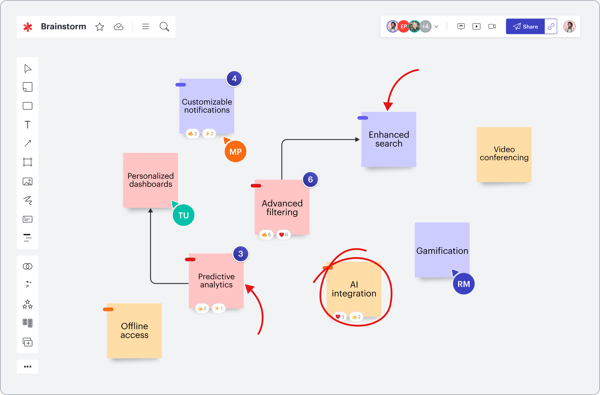
One of many standout options for me was Lucid’s intuitive drag-and-drop interface. The thoughts mapping device is simple to select up, and I may rapidly create organized, visually participating maps with out feeling slowed down by difficult settings or options. The templates are numerous, protecting the whole lot from brainstorming classes to challenge roadmaps, so that you don’t have to start out from scratch. In keeping with G2 Information, 85% customers admire the number of templates out there.
From my expertise and per what I’ve seen in G2 evaluations, Lucid is a strong and intuitive device for creating visible maps and diagrams. Nonetheless, I did run into just a few drawbacks. The free model gives restricted storage and performance, which will be irritating for customers engaged on bigger initiatives. Whereas upgrading unlocks a wealth of options, the pricing can really feel steep for smaller groups or particular person customers.
I additionally observed that as initiatives grow to be extra complicated, navigation turns into extra cumbersome. The interface can begin to really feel cluttered when a number of collaborators are concerned, and responsiveness on cellular units isn’t as easy as on desktop. Nonetheless, regardless of these challenges, Lucid stays probably the most succesful and collaborative visible mapping instruments I’ve used, particularly for structured, team-based work.
What I like about Lucid Visible Collaboration Suite:
- Lucid combines brainstorming, challenge planning, and course of mapping in a single platform.
- The intensive vary of templates makes it straightforward to start out new initiatives.
- Lucid’s drag-and-drop performance is extremely intuitive for leaping into thoughts mapping.
What G2 customers like about Lucid Visible Collaboration Suite:
“Lucid is one of the best software for creating AWS networking/server-related diagrams. It’s straightforward to search out all of the completely different AWS icons, which is a breeze. I ceaselessly use it to create community circulate diagrams, and templates make issues a lot simpler. We have carried out it all through the corporate and have many workers using it. It simply integrates with different purposes like Adobe and exports to MS Visio if some customers wish to view/replace it.”
– Lucid Visible Collaboration Suite Overview, Jody H.
What I dislike about Lucid Visible Collaboration Suite:
- Lucid’s superior templates and integrations are solely out there in paid plans. I observed G2 customers point out that this will restrict the performance of free customers. Nonetheless, most agree the improve provides sturdy worth for workforce collaboration.
- I additionally observed that Lucid can lag when dealing with massive, complicated thoughts maps. I observed G2 customers point out that it’s a downside for giant initiatives, however total efficiency stays strong for many on a regular basis use instances.
What G2 customers dislike about Lucid Visible Collaboration Suite:
“I’ve to open Lucid in incognito mode as a result of it doesn’t load correctly in customary Google Chrome. Though it really works in different browsers, I primarily use Chrome, which provides inconvenience. Moreover, it’s irritating to have to regulate the font measurement and coloration settings manually each time. Lastly, it will be higher if solely the doc creator may disguise or unhide content material for higher management and group.”
– Lucid Visible Collaboration Suite Overview, Cindy C.
4. FigJam: Greatest for interactive ideation and inventive collaboration
Throughout my hands-on testing, I used to be struck by how FigJam fosters creativity and collaboration by way of an intuitive, whiteboard-like expertise. Whereas it’s a wonderful thoughts mapping device, what actually units FigJam aside is its give attention to spontaneity and real-time collaboration, making it splendid for groups in search of a extra dynamic strategy to brainstorming.
A novel side of FigJam is its extremely interactive nature. Customers can draw, add sticky notes, create shapes, and use emoticons to react to one another’s concepts. I discovered this an attractive technique to brainstorm and preserve vitality in workforce conferences or collaborative classes.
You can too reap the benefits of FigJam’s “cursor chat,” which permits real-time conversations straight on the thoughts map, making it really feel like a dwell dialogue round a bodily whiteboard.
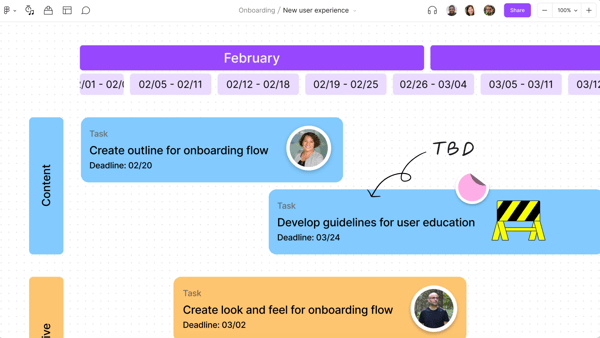
One among my favourite options is its seamless integration with Figma. Should you’re already utilizing Figma for design work, FigJam turns into a pure extension for brainstorming and planning. It allows you to transition easily from thoughts mapping to detailed design work with no need to change between platforms.
Based mostly on my evaluate of G2, Figma is superb for real-time brainstorming and visible collaboration. The free model gives a variety of performance, however the paid plan supplies limitless boards, enhanced integrations, and superior collaboration instruments. That stated, its interactive nature can typically get messy—when too many individuals contribute directly, the board can really feel cluttered, making it tougher to remain centered on key concepts.
I additionally observed that FigJam doesn’t provide a lot flexibility for structuring thoughts maps. It’s nice for creativity and visible circulate, however if you would like exact layouts or detailed hierarchy management, it might really feel limiting. Nonetheless, FigJam shines as a collaborative, team-friendly house that encourages open, artistic pondering, particularly for teams that thrive on spontaneous concept sharing.
What I like about FigJam:
- The power to attract freely, add sticky notes, and use emoticons created a enjoyable and interesting surroundings for my workforce’s brainstorming classes.
- As a Figma consumer, FigJam turned a pure extension of my workflow, permitting me to rapidly transition from brainstorming to design.
- FigJam’s dwell collaboration options, like cursor chat and real-time edits, saved workforce communication fluid and efficient.
What G2 customers like about FigJam:
“I really like how extremely versatile FigJam is. Whether or not facilitating a gathering with my product workforce, operating a design studio, having an inspiration/ hangout sesh, or retaining monitor of my Brag Doc, I can use FigJam for EVERYTHING! It is easy to activate an “open session” for individuals who do not usually use FigJam to attend a gathering, and it is simple sufficient for anybody to select up and use it with me.
The integrations are unimaginable, and as they proceed to roll out, I am so excited to see how the AI continues to enhance as a result of it simply cuts my setup time by 90%!”
– FigJam Overview, Izzi H.
What I dislike about FigJam:
- FigJam makes it straightforward to personalize boards with colours, shapes, and sticky notes. That stated, I’ve noticed G2 customers point out that it doesn’t provide the identical depth of customization as instruments designed particularly for thoughts mapping.
- I additionally discovered the template library to be considerably restricted in comparison with different platforms. G2 customers point out that this will make it tougher to construction complicated or detailed maps.
What G2 customers dislike about FigJam:
“I want it had extra options from Figma and was higher related with bringing in wireframes from Figma. For instance, if I copy a wireframe over, I’ve minimal performance when making modifications. I want I may merge cells within the desk and have one thing like auto-layout for the tables in order that as the info within the desk will increase, the desk adjusts.”
– FigJam Overview, Chinelo N.
5. Mural: Greatest for agile planning and workforce collaboration
Mural’s thoughts mapping capabilities stand out for groups that worth structured creativity like mine. Once I explored Mural, what impressed me essentially the most was the way it allows brainstorming in a pure but organized method. Not like instruments that lean too closely on freeform design, Mural strikes a steadiness by providing structured templates whereas permitting sufficient flexibility to adapt to your workflow.
One of many key options I appreciated was Mural’s give attention to guided collaboration. In keeping with G2 Information, 95% customers worth the capability it supplies for groups to collaborate on initiatives and different duties throughout the platform. It supplies built-in frameworks, resembling design pondering templates, technique planning boards, and thoughts mapping guides, which can be significantly helpful for groups navigating complicated initiatives or decision-making processes. These instruments actively helped me steer brainstorming classes in a productive route.
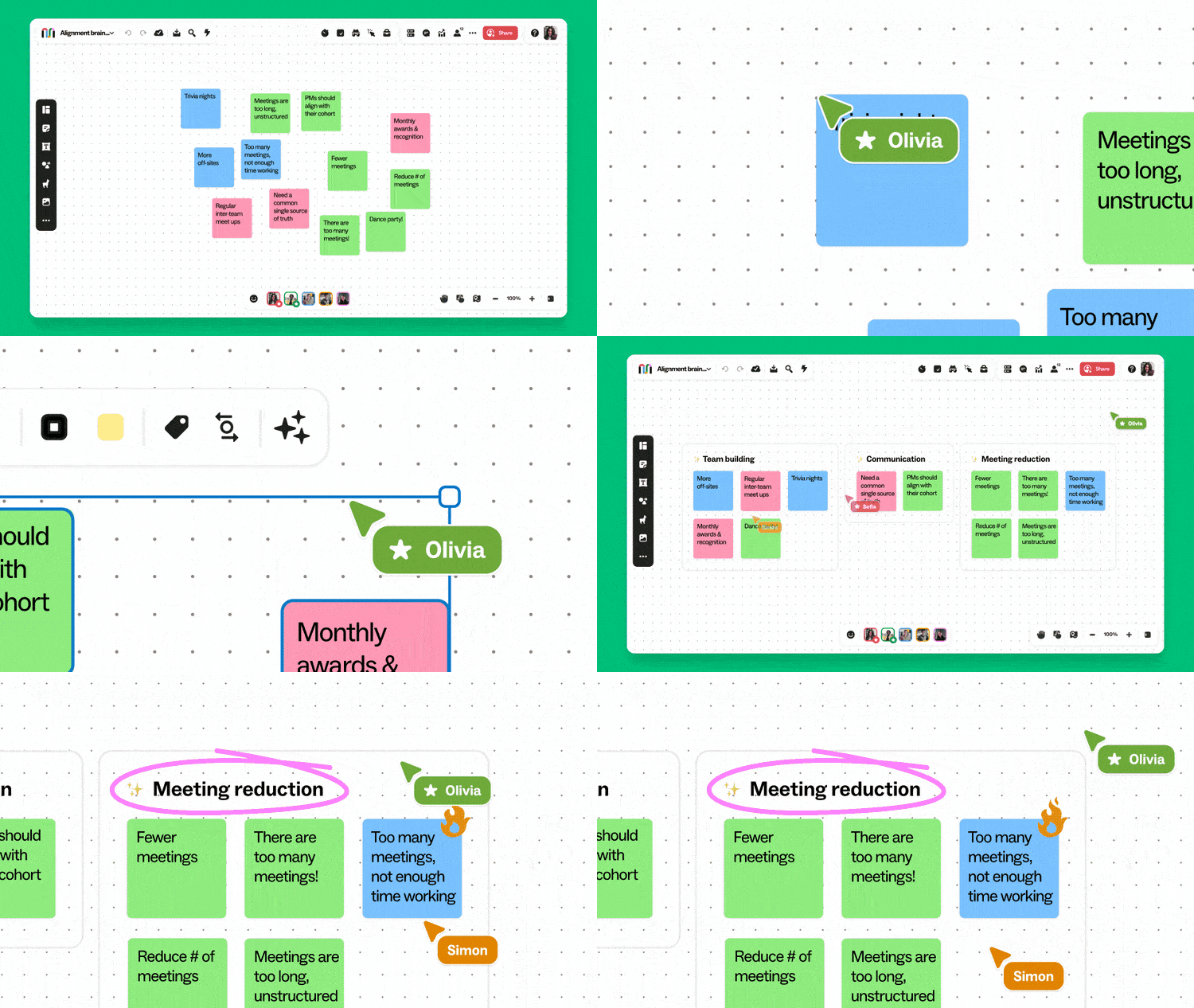
One other spotlight is Mural’s emphasis on asynchronous collaboration. Not everybody works in real-time, and Mural understands this. I discovered the power to go away feedback, pin notes, or contribute concepts at any time to be extremely helpful for groups like mine, which span completely different time zones and juggle a number of priorities.
Mural additionally excels at participating groups with its visible and interactive instruments. Options like voting, timers, and icebreaker workout routines make collaborative classes extra dynamic. It’s not nearly making a thoughts map, but additionally about fostering engagement and creativity all through the method.
The free plan is ample for small groups or private initiatives, however the paid variations unlock limitless murals, superior integrations, and enterprise-grade safety. I additionally observed that managing consumer permissions and entry in Mural could possibly be cumbersome, particularly when collaborating with exterior companions or shoppers who want non permanent entry.
Should you’re in search of a thoughts mapping device that does greater than show you how to brainstorm — one that gives a structured, participating platform for workforce collaboration, Mural is a unbelievable selection.
What I like about Mural:
- It gives the proper steadiness between freeform brainstorming and structured planning, catering to completely different work kinds
- I really like that my workforce can contribute at its personal tempo, leaving feedback and including concepts with out the necessity for everybody to be on-line concurrently.
- Mural’s interactive instruments, like voting, timers, and workout routines, made collaborative classes extra participating and productive.
What G2 customers like about Mural:
“Mural is the device that lets you specific your self and what you wish to talk, adapting to your wants and people of others. It isn’t only a device however an essential technique of synchronous and asynchronous interplay and communication. It may be used for private causes (organizing journeys, actions, e-book evaluations, research notes) {and professional} causes in groups and supporting whole organizations.”
– Mural Overview, Valerio A.
What I dislike about Mural:
- From my expertise and what I’ve seen in G2 evaluations, Mural is superb for visible collaboration and workforce brainstorming. That stated, managing bigger groups inside a single board can get chaotic as exercise scales.
- I additionally observed in G2 evaluations that determining which templates match particular workflows takes some trial and error, particularly for brand new customers. Nonetheless, when you grow to be acquainted with it, Mural’s construction and adaptability make it a robust device for organized and inventive collaboration.
What G2 customers dislike about Mural:
“When murals are at a sure scale, there are some efficiency points, and my laptop computer appears to decelerate. It’s only when workspaces are created too massive, so it could be extra of a consumer misuse, however I feel it could possibly be in some way optimized.”
– Mural Overview, Clara S.
6. Padlet: Greatest for sharing multimedia-rich concept boards
Padlet takes a singular strategy to thoughts mapping by providing a collaborative, digital corkboard expertise. Not like conventional thoughts mapping instruments that focus to nodes and branches, Padlet excels in its potential to facilitate freeform brainstorming with visible and multimedia components.
Once I examined Padlet, I discovered it particularly helpful for initiatives that profit from mixing textual content, photos, hyperlinks, and even movies in a single house—making it really feel extra like a artistic playground than a inflexible mapping device.
I’m a fan of Padlet’s simplicity. It’s extremely straightforward to arrange and use, even for first-time customers. You can begin with a clean canvas or select from pre-designed templates, then drag and drop gadgets to prepare your concepts. It feels intuitive, which makes it an awesome selection for brainstorming classes or private thoughts maps.
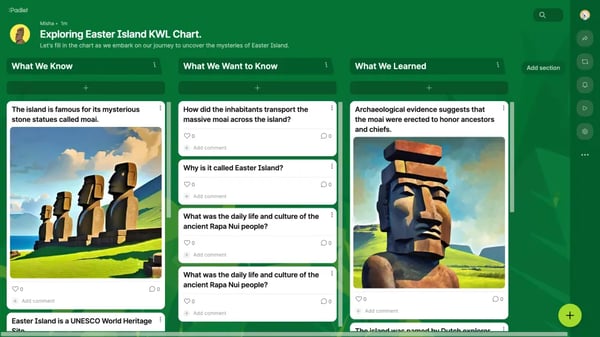
One other function I really like about Padlet is its assist for multimedia. You’re not restricted to only textual content or shapes, you’ll be able to embed movies, add recordsdata, or hyperlink to exterior assets straight inside your map. This provides depth to your thoughts maps and is very useful for initiatives that contain analysis or wealthy content material.
Collaboration on Padlet can also be simple. You may invite workforce members to contribute in real-time or asynchronously. It gives a commenting function that’s splendid for leaving suggestions or discussing concepts with out counting on exterior communication instruments.
Whereas it excels in visible enchantment and adaptability, Padlet doesn’t combine as deeply into challenge administration workflows as different instruments, making it much less splendid if you happen to’re in search of one thing that connects seamlessly with task-tracking or project-planning software program.
The free model is ample for easy initiatives, however premium plans present extra options like extra storage, privateness choices, and superior customization. Moreover, the free model does not assist superior customization, so that you may really feel a bit restricted if you happen to’re making an attempt to fine-tune the design or construction of your thoughts maps.
What I like about Padlet:
- Its simplicity and ease of use make it accessible even for these new to thoughts mapping instruments.
- I really like how simply it’s to straight incorporate photos, movies, and hyperlinks into thoughts maps.
What G2 customers like about Padlet:
“Padlet is a unbelievable platform for lecturers the place the whole lot will be present in one place: from classes to collaborative work and even digital portfolios. Utilizing Padlet and the brand new Sandbox platform may be very straightforward, and it is also doable to import recordsdata from Jamboards or Flip in seconds. The combination is easy.
In simply half-hour, I discovered how you can navigate the brand new Sandbox platform, and I’m thrilled with its performance. It is splendid for primary-level lecture rooms, the place it’s normally robust to search out platforms that meet the wants of youthful learners. I extremely advocate Padlet to all educators. I take advantage of it daily due to the convenience of implementation.”
– Padlet Overview, Josée L.
What I dislike about Padlet:
- I observed that G2 customers acknowledge that Padlet is unbelievable for creativity, nevertheless it lacks superior options like auto-layout or hierarchical buildings that devoted mind-mapping instruments provide.
- I really feel just like the premium plans are feature-rich. Many G2 customers point out that they could be costly for smaller groups or people.
What G2 customers dislike about Padlet:
“The pricing plan. Solely three Padlets are allowed within the free plan. If you might want to create the fourth one, you could get rid of one of many three Padlets at hand. For an educator, shedding a Padlet is disastrous. Not all educators can afford the worth plan. If their faculties will not be funding them, they can’t afford Palet.”
– Padlet Overview, Mohamed S.
7. Freehand: Greatest for visible suggestions and real-time design evaluate
Freehand impressed me with its potential to facilitate brainstorming classes far past conventional thoughts mapping. Its give attention to inclusive collaboration stood out because of options like voting, emoji reactions, and guided templates.
These aren’t simply gimmicks—they turned brainstorming right into a genuinely participating exercise that inspired everybody’s participation, even those that is perhaps hesitant to talk up.
One function I discovered significantly distinctive was the model historical past. It allowed me to revisit earlier iterations of a thoughts map, which is invaluable when an concept from an earlier section immediately turns into related once more. Not all instruments provide this stage of flexibility, making me really feel extra assured experimenting with concepts.
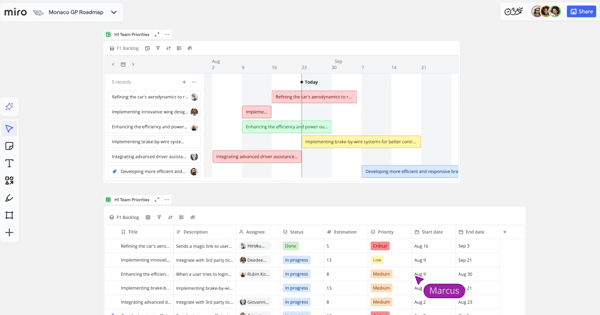
One other standout was the presentation mode. After a session, I may seamlessly change from brainstorming to sharing a cultured map model with stakeholders. This eradicated the necessity to export or recreate visuals elsewhere, saving me time. For somebody juggling a number of duties, this was a large plus.
Freehand additionally strongly focuses on accessibility, with choices for display screen readers and a darkish mode that was simpler on my eyes throughout prolonged classes. Whereas different instruments cater primarily to visuals, Freehand ensures numerous groups can collaborate successfully.
Its freeform canvas makes it splendid for mapping concepts, however I discovered it useful in creating workflows or easy storyboards. Freehand gives one thing distinct for groups in artistic industries or anybody in search of a visually participating technique to brainstorm.
Nonetheless, not like different instruments that permit for extra structured templates, Freehand’s solely freeform strategy may not be splendid for customers preferring a extra organized, grid-like construction to their thoughts maps. Moreover, whereas the presentation mode is nice, it lacks a number of the superior design options out there in different instruments, that means you may must do some further work to shine maps for a proper presentation.
What I like about Freehand:
- The freeform nature of the canvas is ideal for creativity whereas offering instruments like sticky notes and connectors for construction.
- Freehand’s seamless integration with design instruments permits quicker design execution.
What G2 customers like about Freehand:
“What I like most about InVision Freehand is that it may be a outstanding device and a great way to start with as a result of it gives a easy and intuitive interface, making it straightforward to get began with creating designs, sketching out concepts, and likewise a wonderful technique to share your concepts with others and prototypes.
Invision Freehand can also be an awesome device for design collaboration on design initiatives as a result of it’s an important side of the design course of for any group. It could actually result in higher communication, elevated creativity, quicker decision-making, elevated productiveness, higher high quality outcomes, and enhanced workforce constructing.”
– Freehand Overview, Muhammad Yar Okay.
What I dislike about Freehand:
- I really feel just like the freeform instruments are useful. However I’ve observed G2 customers point out that if any workforce isn’t comfy with freeform visible instruments, they may wrestle to make use of them successfully.
- I noticed that the sensible instruments, like voting and integrations, are nice! Nonetheless, G2 customers notice that the superior options are behind a paywall, which limits the performance of smaller groups.
What G2 customers dislike about Freehand:
“There are a whole lot of options and integrations we do not see a use for, so I am afraid of it turning into “an excessive amount of.” A giant a part of the explanation I take advantage of Freehand is to insert screenshots for reference, and I do not like that I can not rotate them after I wish to. We’ve got additionally observed that zooming out and in from the mousepad has not been working typically, which isn’t splendid in conferences. I want I may see from a look which viewers are actively wanting on the board, not simply have it open in one in all their internet tabs.”
– Freehand Overview, Tara H.
8. Gliffy: Greatest for structured diagramming {and professional} charts
Gliffy focuses on diagramming precision and technical versatility. It’s not only for brainstorming; it’s additionally a powerhouse for creating detailed flowcharts, UML diagrams, and community structure visuals. Once I examined Gliffy, I used to be impressed by its potential to mix thoughts mapping with technical diagramming—good for when creativity meets construction.
For customers preferring templates, Gliffy doesn’t disappoint. It gives a variety tailor-made to completely different wants, whether or not you’re mapping out a product roadmap, a enterprise course of, or a challenge workflow.
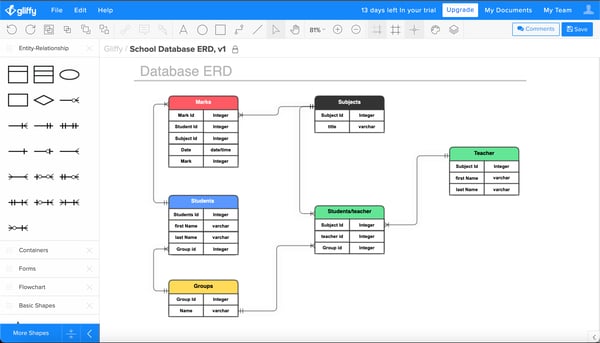
One other distinctive side is its integration with Confluence and Jira, which makes it a pure selection for groups already utilizing Atlassian merchandise. I can embed thoughts maps straight into my Confluence pages or hyperlink them to Jira duties, streamlining collaboration with no need to change between platforms.
The revision historical past additionally stood out throughout my testing. It allowed me to see each change made to a map, making it straightforward to revert to earlier variations when wanted. This function was a lifesaver for workforce initiatives, particularly when a number of contributors have been concerned.
After studying by way of a number of G2 evaluations and testing Gliffy myself, I observed a constant theme: Gliffy excels when construction and precision are most essential. Its emphasis on accuracy makes it a wonderful selection for technical diagrams, flowcharts, and structured challenge planning.
That stated, this similar rigidity can really feel limiting for customers preferring free-form or artistic brainstorming. The interface, whereas practical, feels considerably dated in comparison with extra fashionable mind-mapping instruments — a sentiment echoed by a number of reviewers.
One other frequent ache level is the restricted free plan, which solely covers fundamental performance. With out entry to superior templates or expanded storage, groups dealing with bigger or extra collaborative initiatives may discover it constraining.
Total, I discovered that Gliffy’s technical focus and precision make it a standout for engineers, challenge managers, or anybody who values readability over visible aptitude, however much less splendid for these searching for a extremely versatile or visually dynamic brainstorming expertise.
What I like about Gliffy:
- I discovered Gliffy good for creating flowcharts and different structured visuals alongside thoughts maps.
- The power to embed diagrams straight into Confluence and hyperlink them to Jira duties saved me a ton of time.
- Monitoring modifications and reverting to earlier variations was useful for collaborative initiatives.
What G2 customers like about Gliffy:
“Gliffy is commonly appreciated for its intuitive interface, ease of use, and flexibility in creating diagrams and visible representations. Customers typically commend its huge library of shapes and templates, which make it handy for numerous diagramming wants, from flowcharts to community diagrams. Customers additionally extremely worth its integration capabilities with different platforms and collaborative options.”
– Gliffy Overview, Trinadh V.
What I dislike about Gliffy:
- After studying a number of G2 evaluations, I discovered it excels in precision and construction, making it splendid for technical diagrams and process-driven initiatives.
- I consider that its dated interface and restricted free plan can limit creativity and collaboration, particularly for customers searching for a extra fashionable or versatile mind-mapping expertise.
What G2 customers dislike about Gliffy:
“One downside of Gliffy is that its free model has restricted options and capabilities, which is perhaps restrictive for customers who require superior performance or must create all kinds of complicated diagrams. Upgrading to the paid model is critical to unlock the device’s full potential, which is usually a draw back for budget-conscious people or small groups.”
– Gliffy Overview, Elmi M.
9. Klaxoon: Greatest for operating interactive conferences and workshops
Once I used Klaxoon, I felt it was much less about organizing concepts and extra about sparking significant group conversations. It gives a contemporary strategy to thoughts mapping by specializing in workforce engagement and interactive collaboration, making it a standout selection for workshops, brainstorming classes, and hybrid groups.
The brainstorming module was pleasing to make use of. It transforms conventional thoughts mapping into an attractive group exercise. As an alternative of merely connecting concepts, Klaxoon allowed my workforce to contribute by way of textual content, photos, or drawings, permitting everybody to precise themselves of their most well-liked method. This flexibility made it straightforward to assemble numerous views throughout my classes.
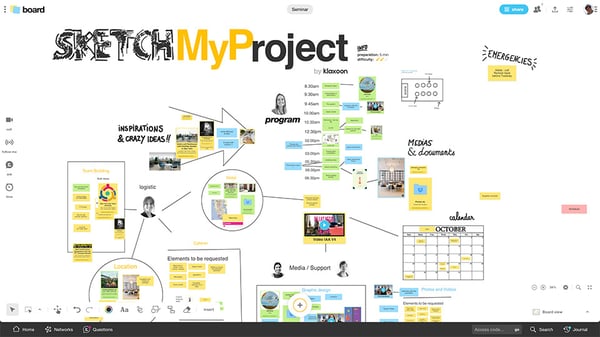
Klaxoon additionally excels with its dwell query function, permitting groups to ask and reply questions in real-time. This function was invaluable for breaking down complicated concepts and making certain everybody was on the identical web page. Throughout one in all my assessments, I used it to make clear factors because the thoughts map developed, which saved the workflow easy and inclusive.
One other standout for me was Klaxoon’s assembly board integration. This bodily whiteboard syncs straight with Klaxoon’s digital instruments, bridging the hole between in-person and distant workforce members. It’s not one thing I’ve seen in lots of different instruments, and it made hybrid collaboration really feel seamless.
Whereas Klaxoon excels at group collaboration, its emphasis on interactive options can really feel overwhelming for solo initiatives or extra simple use instances. Should you’re engaged on a simple mind-mapping job with out the necessity for intensive group interplay, Klaxoon might really feel unnecessarily complicated.
Moreover, the device’s interface will be considerably cluttered, which can detract from the session’s focus, particularly for customers new to the platform. Nonetheless, it is a prime contender for groups trying to energize their brainstorming classes and foster engagement.
What I like about Klaxoon:
- I loved Klaxoon’s give attention to interplay, making it straightforward for my hybrid workforce to remain in sync.
- Personalization choices make it straightforward so as to add texts, photos, and drawings.
What G2 customers like about Klaxoon:
“Klaxoon permits each day agility to adapt to modifications within the firm’s communication mode and inside functioning, resembling distant work. Concerning coaching, which is at present my important use, Klaxoon allows accelerated and facilitated studying. With the selection of actions, it’s doable to simply fluctuate the tutorial strategies of learners’ studying and validate the acquired data at every step.”
– Klaxoon Overview, Mickael G.
What I dislike about Klaxoon:
- I observed G2 customers point out that whereas practical throughout the platform, exporting maps to different instruments or codecs was much less seamless than I’d hoped.
- With Klaxoon’s give attention to interactivity, G2 customers consider that the device could also be extra appropriate for groups than solo customers.
What G2 customers dislike about Klaxoon:
“The one factor I’ve detected is that while you duplicate a board or a session, the ‘dwell questions’ will not be duplicated. And when I’ve added a ‘video’ to the outline of a ‘step’ in a mission or journey, typically it detects it as an error and doesn’t play it.”
– Klaxoon Overview, Wenceslao U.
10. Visio: Greatest for enterprise-grade course of documentation
Microsoft Visio is right for professionals who want precision, particularly for creating extremely structured diagrams and technical visualizations. Not like many different instruments I examined, Visio leans closely into enterprise-level performance, making it splendid for groups requiring formal documentation and thoughts mapping.
Visio’s depth of diagramming choices is unbelievable. Whereas testing, I used to be impressed by its potential to deal with the whole lot from fundamental flowcharts to intricate community architectures, flooring plans, and organizational charts. Visio’s options are laborious to beat in case your thoughts mapping typically intersects with technical fields.
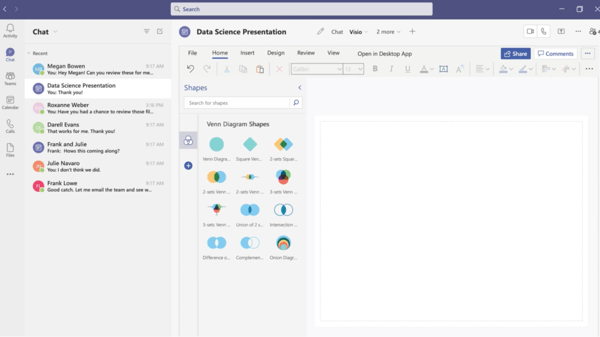
Its integration with the Microsoft Workplace ecosystem is one other massive win. Since I typically use Phrase, Excel, and PowerPoint in my workflow, Visio’s potential to tug knowledge straight from these instruments made creating data-driven diagrams a breeze. For instance, I linked an Excel sheet to a thoughts map, and Visio auto-populated components based mostly on my knowledge—one thing I hadn’t seen with most different instruments.
One distinctive function I appreciated was its real-time collaboration by way of Microsoft Groups. This integration made it straightforward for to collaborate on diagrams with my workforce, even once we have been working remotely. I may share a dwell model of a thoughts map and get instant suggestions, which streamlined our decision-making course of.
That stated, Visio isn’t for everybody. Its superior options include a steeper studying curve and are geared towards enterprise customers fairly than informal brainstormers. The fee also can add up rapidly, particularly for groups that want the complete suite of instruments.
Total, Visio excels in technical diagramming and structured thoughts mapping, nevertheless it’s greatest suited to professionals or groups requiring detailed and formalized visualizations fairly than informal brainstormers or solo customers.
What I like about Visio:
- I may pull knowledge straight from Excel and embed diagrams into PowerPoint, which saved me time.
- The vary of templates Visio gives covers nearly each use case I can consider.
What G2 customers like about Visio:
“Visio is a superb device for making complicated flowcharts, Structure Diagrams, technical Drawings, and many others. It permits Workplace 365 integration and is simple to share with colleagues to work concurrently. It may be an awesome versatile device for professionals in numerous fields, together with enterprise, engineering, and IT.
Nonetheless, typically, when working with colleagues, updates are delayed, similar to with each different MS Workplace product. Visio supplies intensive customization choices, permitting customers to create extremely detailed and polished diagrams. Nice to make use of for knowledge linking, enabling customers to create dynamic diagrams linked to exterior knowledge sources resembling Excel. Simple to make use of to create complicated diagrams.”
– Visio Overview, Charan Okay.
What I dislike about Visio:
- I feel Visio has a number of superior options. However G2 customers point out that as a brand new consumer, navigating them can take effort and time
- I noticed G2 customers point out that it facilitates structured, technical work, however the fee also can add up rapidly, particularly for groups that want the complete suite of instruments.
What G2 customers dislike about Visio:
“The UI may appear somewhat intimidating to these not skilled with diagramming instruments. Moreover, some individuals or small companies could also be postpone by the fee construction, which is on the upper finish of the vary for such devices.”
– Visio Overview, Siddharth Okay.

Comparability of one of the best thoughts mapping software program
| Software program | G2 ranking | Free plan | Perfect for |
| Miro | 4.7/5 | Sure, with three editable boards | Crew managers, distant groups, and educators |
| ClickUp | 4.7/5 | Sure, limitless duties, 100MB storage | Venture managers and groups juggling complicated workflows and job dependencies. |
| Lucid Visible Collaboration Suite | 4.5/5 | Sure, three editable paperwork | Enterprise analysts, IT groups, and strategists creating detailed flowcharts and diagrams. |
| FigJam | 4.5/5 | Sure, limitless fundamental boards | Designers, product groups, and workshop facilitators in search of fast and inventive ideation. |
| Mural | 4.6/5 | Sure, limitless collaborators on three murals | Agile groups, facilitators, and consultants engaged on dash planning or technique mapping. |
| Padlet | 4.9/5 | Sure, 3 free Padlets | Educators, college students, and inventive professionals sharing multimedia concepts interactively. |
| Freehand | 4.3/5 | Sure, limitless collaborators, three freeboards | Designers and inventive groups reviewing prototypes and gathering suggestions in actual time. |
| Gliffy | 4.4/5 | Sure, restricted options for single customers | Engineers, builders, and technical groups creating diagrams for shows or documentation. |
| Klaxoon | 4.7/5 | Sure, restricted templates and session instruments | Crew leaders and workshop facilitators searching for interactive conferences and brainstorming options. |
| Visio | 4.2/5 | No | Enterprise customers, IT professionals, and designers needing strong, technical diagramming instruments. |
Continuously requested questions on thoughts mapping software program
Have extra questions? Discover extra solutions under.
What’s the greatest thoughts mapping software program?
The “greatest” thoughts mapping software program depends upon your particular wants. Miro is a prime choose for hybrid groups with its versatile options. ClickUp is a wonderful device for challenge administration and thoughts mapping in a single. Lucid Visible Collaboration Suite is right for creating detailed flowcharts and technical diagrams.
Is there free thoughts mapping software program out there?
Many thoughts mapping instruments provide free plans catering to fundamental wants. Miro lets you create as much as three editable boards at no cost, whereas ClickUp’s free plan contains limitless duties and as much as 100MB of storage. Padlet and Freehand additionally present free entry with sure limitations, making them wonderful choices for people or small groups.
Which thoughts mapping software program is greatest for Mac customers?
Mac customers will discover Miro, FigJam, and Freehand extremely suitable. These instruments provide intuitive interfaces and seamless efficiency on macOS, making them splendid for brainstorming and collaboration throughout the Apple ecosystem.
What’s the greatest free thoughts mapping software program for college kids?
Padlet is a standout selection for college kids, permitting them to create multimedia-rich, interactive concept boards. Miro’s free plan additionally works effectively for collaborative assignments, and Freehand gives simple instruments good for group initiatives and shows.
Are there thoughts mapping instruments that combine with different productiveness software program?
Many fashionable thoughts mapping instruments excel at integration. ClickUp, as an example, connects with numerous challenge administration and productiveness platforms, making it splendid for workflow automation. Miro additionally helps integrations with instruments like Slack and Google Workspace, making certain a seamless collaboration expertise.
Can I take advantage of thoughts mapping software program for challenge administration?
Sure, many thoughts mapping instruments double as challenge administration platforms. ClickUp, particularly, gives options like job dependencies, timelines, and workflow visualization, making it a strong selection for groups. Miro additionally allows challenge planning by way of its visually wealthy interface.
Are there thoughts mapping purposes appropriate for educators?
Educators typically desire instruments like Padlet to simplify the sharing of multimedia content material and have interaction college students interactively. Miro is one other nice possibility, providing versatile templates that may be tailored for lesson planning or collaborative classroom initiatives.
Can I entry thoughts mapping software program on cellular units?
Sure, many thoughts mapping instruments have cellular purposes or responsive internet platforms. Instruments like Miro, ClickUp, and Freehand permit customers to create and edit thoughts maps on their cellular units, making certain flexibility and comfort.
Thoughts over matter
After testing out a variety of instruments, it is clear to me that there’s no one-size-fits-all with regards to artistic wants like thoughts mapping. Whether or not you’re in search of collaboration options, challenge administration integration, or one thing easy and intuitive, my record of one of the best thoughts mapping software program gives distinct benefits. From versatility to job administration capabilities and multimedia options, there’s an answer for everybody.
Now that I’ve shared my ideas and experiences with these thoughts mapping instruments, it’s time so that you can take the following step. Contemplate what’s most essential to you—collaboration, ease of use, or integrations along with your present workflows—and discover the choices that greatest suit your objectives. Should you’re not sure, reap the benefits of the free plans most of those instruments provide.
Get one step nearer to remodeling your artistic processes and initiatives by way of design pondering.

