



This text accommodates spoilers for “Pluribus” episode 1.
We have seen the collapse of society resulting from an encroaching cataclysmic pressure happen dozens of instances earlier than. Between catastrophe motion pictures, alien invasion flicks, zombie apocalypse movies, and pandemic thrillers, we’ve got a trope-filled template of how these occasions are inclined to go. As such, we’re not often gifted a narrative or sequence on this vein that feels virtually wholly distinctive. That is why it is such a deal with to come across one thing like “Pluribus,” showrunner Vince Gilligan’s new sequence on Apple TV.
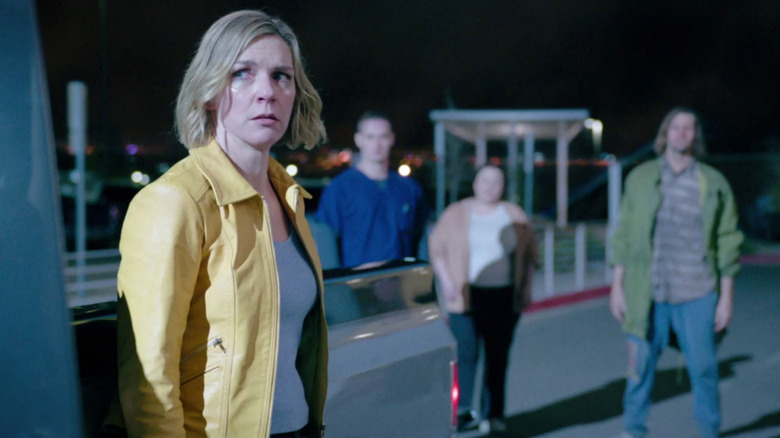
The majority of the sequence is a grounded sci-fi satire about Carol (Rhea Seehorn) coping with her newfound standing as one of many final human beings with autonomy left after a mysterious virus transforms many of the inhabitants right into a hive thoughts organism. To get thus far, nonetheless, the pilot episode, entitled “We is Us,” (written and directed by Gilligan) presents us with a mix pandemic apocalypse/alien invasion thriller, and it is one of the exhilaratingly contemporary examples of that kind of story but.
The freshness that “Pluribus” brings not simply to tv however these well-worn style concepts might be seen in higher distinction when in comparison with the pilot episode of HBO’s “The Final of Us.” That sequence additionally begins with a terrifying collapse of society in actual time, albeit one which skews a lot nearer to the zombie outbreak narrative originated by George A. Romero in his “Lifeless” movies. The episode, entitled “When You are Misplaced within the Darkness,” not solely hits many of the expected-by-now beats of the zombie subgenre — societal norms being ripped away, sudden, surprising violence and loss, and many others. — it additionally sticks means too near its online game supply materials. “Pluribus” is proof that originality can nonetheless occur whereas referencing and homaging what’s come earlier than.
‘The Final of Us’ is hobbled by its supply materials
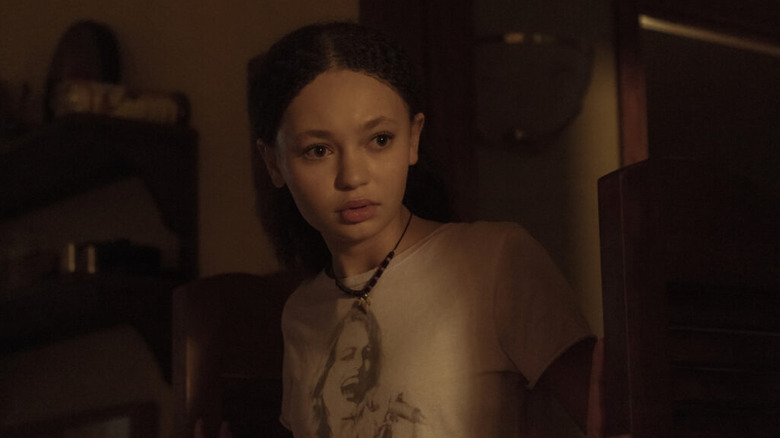
Initially, “When You are Misplaced within the Darkness” appears to vow its personal contemporary method to the zombie/pandemic apocalypse story, because the episode begins with a fictional discuss present from 1968 involving a few scientists speaking concerning the potential of a future pandemic and a possible plague involving mind-controlling fungi, which foreshadows the disastrous outbreak of a cordyceps virus. The outbreak happens in 2003 (permitting the majority of the post-apocalyptic present to happen in an alternate 2023), which is paradoxically, perhaps deliberately, one 12 months away from 2004, when “Shaun of the Lifeless” and Zach Snyder’s remake of “Daybreak of the Lifeless” have been launched. The episode, directed and co-written by Craig Mazin (with the sport’s creator, Neil Druckmann, as the opposite co-writer), most intently resembles Snyder’s movie in its depiction of brutal horror altering the lives of its characters instantly.
What’s most unlucky concerning the episode — and all the live-action sequence — is the way in which it hews so near the online game’s construction and storytelling that it feels much more by-product than most generic zombie-coded movies and exhibits. The largest promoting level of the episode’s horror lies inside the Hitchcock-esque bait-and-switch of Sarah (Nico Parker), the daughter of Joel (Pedro Pascal), who’s portrayed because the protagonist however is then all of a sudden killed by the center of the episode. It is the identical trick performed by the online game, utilizing the identical character. Not solely that, however the recreation made this emotional cruelty way more potent, permitting the participant to manage Sarah for a time earlier than the heartbreaking reveal.
On this vogue, HBO’s “The Final of Us” is not referencing or homaging one other movie, present, or style trope; as an alternative, it is referencing itself, and comes off like a duplicate of a duplicate.
‘Pluribus’ has a intelligent method to its style
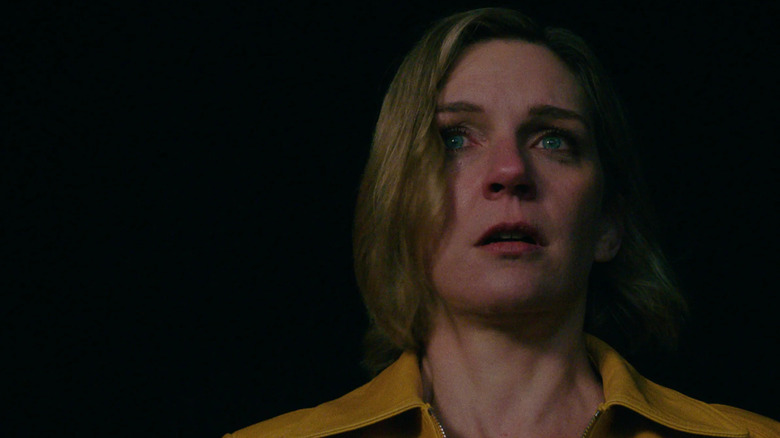
In contrast, “Pluribus” is a marvel of innovation and style reverence. It is virtually unattainable to predict precisely the place it is going, but a lot of it feels acquainted sufficient to create a way of irony and dread. The episode begins with scientists who look like working for a SETI-style program, monitoring deep house for any potential indicators of clever life. After they come throughout a mysterious transmission which they ultimately deduce is an RNA sequence, they might suppose that their determination to create it in a lab goes to make them the next fact, a la Robert Zemeckis’ “Contact.”
As an alternative, this alternative is way more akin to that in Roger Donaldson’s “Species,” wherein an RNA sequence is transmitted to Earth with the specific objective of inflicting an invasion from inside. And that is what occurs in “We Is Us,” albeit with much less intercourse and violence. As an alternative, the virus quickly spreads internationally and seems to make individuals docile and hive-minded, extremely harking back to the “pod individuals” from Don Siegel’s “Invasion of the Physique Snatchers.”
Regardless of the homages to basic sci-fi and horror, “Pluribus” by no means goes by way of the anticipated beats of the apocalypse as “The Final of Us” does. As an alternative, we observe Carol by way of an more and more demanding, nightmarish, and surreal expertise, one the place neither she nor we are able to predict what occurs subsequent. The onset of the invasion does not occur all of a sudden however progressively, as an alternative, instantaneously. It is an ingeniously eerie depiction of a mix pandemic and invasion, and it units “Pluribus” aside from its friends whereas its makers display their deep data of and reverence for the style. Depart it to an alum of “The X-Recordsdata” to show style conventions on their head.
“Pluribus” is accessible on Apple TV.

