



When recurring income turns into the spine of your online business, billing stops being a back-office process and begins turning into income infrastructure. I’ve seen how rapidly failed funds, inflexible pricing fashions, disconnected methods, and weak reporting can create operational drag. That’s why selecting the very best subscription administration software program issues greater than most groups initially count on.
I wished to know which platforms really help pricing experimentation, automate complicated billing logic, combine cleanly with CRM and accounting methods, and scale alongside rising income operations. Not simply instruments that ship invoices, however methods that shield money movement, scale back income leakage, and provides finance and RevOps leaders actual management over the subscription lifecycle.
So I analyzed the highest options utilizing the G2 Grid Report back to determine the six platforms that actually strengthen recurring income infrastructure as corporations scale. The highest 6 subscription administration software program that made it to the checklist are Chargebee, Salesforce Income Cloud, Paddle, Sage Intacct, Maxio, and Stripe Billing.
6 finest subscription administration software program for 2026: My high picks
| Greatest subscription administration software program | G2 Ranking | Greatest for | Standout characteristic | Pricing |
| Chargebee | 4.4/5 ⭐️ | Greatest general for subscription flexibility | Extremely versatile subscription engine with built-in dunning automation that helps tiered, usage-based, and hybrid pricing at scale. | Beginning at $599 |
| Salesforce Income Cloud | 4.2/5 ⭐️ | Greatest for enterprise quote-to-cash | Finish-to-end quote-to-cash automation inside Salesforce, connecting CPQ, contracts, billing, and renewals below one income knowledge mannequin. | Accessible on request |
| Paddle | 4.5/5 ⭐️ | Greatest for SaaS and digital items (Service provider of Document) | Service provider of Document mannequin that handles world funds, tax compliance, and subscription billing in a single unified system. | Pay-as-you-go |
| Sage Intacct | 4.3/5 ⭐️ | Greatest for multi-entity monetary administration | Multi-entity, multi-dimensional monetary reporting that connects subscription income to structured accounting controls. | Accessible on request |
| Maxio | 4.3/5 ⭐️ | Greatest for B2B SaaS billing complexity | Configurable B2B SaaS billing engine constructed for complicated usage-based, contract-driven, and recurring pricing fashions. | $599/month |
| Stripe Billing | 4.4/5 ⭐️ | Greatest for developer-friendly / embedded billing | Developer-first subscription infrastructure with versatile APIs for embedded, usage-based, and world recurring billing. | Customized pricing |
*These subscription administration software program are top-rated of their class, based on G2’s Winter 2026 Grid Report. I’ve additionally added their pricing particulars to make comparisons simpler for you.
6 finest subscription administration software program I like to recommend
At its core, subscription administration software program runs the operational facet of recurring income. It handles pricing fashions, billing cycles, renewals, cost retries, and income visibility, all of the shifting components that maintain SaaS earnings predictable. As soon as billing complexity will increase, having the suitable system in place makes a noticeable distinction.
That significance is mirrored in market development. The worldwide subscription billing administration market is projected to achieve $17.95 billion by 2030, rising at a 16.9% CAGR. As recurring income fashions broaden throughout SaaS, digital items, and hybrid companies, billing infrastructure is turning into a core development lever moderately than a back-office perform.
What I’ve seen in G2 Information is that the very best platforms transcend invoicing. They help usage-based pricing, automate workflows, combine with CRM and accounting instruments, and scale as they develop. G2 Information additionally displays a powerful real-world influence, with subscription administration instruments on this class reporting a mean person adoption fee of 71% and an ROI rating of 14. Some are constructed for developer flexibility, whereas others are constructed for monetary management or world compliance.
Based mostly on characteristic depth and person suggestions, these six instruments stand out, every robust in several areas, relying in your income mannequin and development stage.
How did I discover and consider these finest subscription administration instruments?
I began with G2’s Grid Reviews to shortlist the highest subscription administration software program based mostly on G2 Rating, person satisfaction, and market presence.
From there, I analyzed G2 critiques at scale to determine recurring themes: how nicely every instrument handles pricing flexibility, billing automation, integrations, reporting depth, and scalability. I targeted on patterns that constantly appeared throughout a number of critiques, particularly round subscription lifecycle management, failed cost administration, world compliance dealing with, and monetary visibility.
Since I couldn’t check every platform instantly, I relied on detailed suggestions from verified customers and cross-checked these insights in opposition to characteristic documentation and G2 satisfaction metrics.
All screenshots included on this article are sourced from G2 vendor profiles and publicly obtainable product supplies.
What makes the very best subscription administration software program: My choice standards
To construct this checklist, I analyzed recurring themes throughout G2’s satisfaction metrics and detailed person critiques to see how these platforms carry out as soon as billing complexity will increase. I targeted on how nicely every instrument helps evolving pricing fashions, recurring income automation, system integrations, and long-term scalability. The aim was to determine which platforms really strengthen income operations as companies develop.
- Pricing flexibility and billing logic: I prioritized platforms that help tiered, usage-based, hybrid, and evolving pricing fashions. The strongest instruments let groups handle upgrades, downgrades, proration, coupons, and trials with out breaking billing accuracy.
- Recurring billing automation and cost restoration: I paid shut consideration to the depth of automation, together with recurring bill technology, failed cost retries, and dunning workflows. Evaluations made it clear that lowering handbook intervention is likely one of the largest worth drivers.
- Subscription lifecycle administration: I seemed for software program that handles the total lifecycle cleanly, from sign-up and plan modifications to renewals and cancellations, with out requiring patchwork instruments or heavy workarounds.
- Integration ecosystem and API flexibility: Since subscription knowledge hardly ever lives in isolation, I evaluated how nicely every instrument connects with CRM, accounting, ERP, and cost methods. Robust API help and clear integrations have been constant indicators of long-term scalability.
- Monetary reporting and visibility: I examined how nicely platforms present perception into recurring income, billing efficiency, and buyer metrics. One of the best instruments don’t simply course of transactions; they assist groups perceive income well being.
- Scalability and world readiness: Multi-currency help, tax dealing with, compliance capabilities, and infrastructure reliability all mattered. Evaluations incessantly highlighted how instruments carried out as soon as transaction quantity elevated.
- Usability throughout groups: I thought of whether or not each the finance and technical groups might work successfully inside the platform. Instruments that steadiness configurability with day-to-day usability constantly scored increased in satisfaction knowledge.
No platform leads throughout each criterion, and trade-offs present up in several areas. The instruments under stand out for his or her energy in core income infrastructure, from pricing flexibility and automation to integrations and monetary visibility, all supported by constant G2 person suggestions.
The checklist under incorporates real person critiques from the Subscription Administration Software program class. To be included on this class, an answer should:
- Outline and handle subscription plans for software program in addition to digital and/or bodily merchandise
- Handle pricing for subscription packages, in addition to reductions and particular provides
- Permit customers to create customized plans, bundles, and multi-year preparations
- Observe the gross sales and income generated by subscription merchandise
- Handle renewals, cancellations, and every other modifications to subscriptions
- Establish new gross sales alternatives, equivalent to upsell and cross-sell
- Retailer buyer info, together with billing, contracts, and funds
- Accommodate computerized funds from quite a few completely different cost strategies
*This knowledge was pulled from G2 in 2026. Some critiques might have been edited for readability.
1. Chargebee: Greatest general for subscription flexibility
Once I have a look at Chargebee, all the things begins with how versatile its subscription engine is. The platform is constructed to deal with recurring income in all its messy, real-world complexity, a number of pricing tiers, add-ons, usage-based billing, plan modifications, coupons, trials, and mid-cycle upgrades, with out forcing inflexible constructions. G2 reviewers repeatedly name out how simple it’s to mannequin completely different pricing eventualities and handle subscription lifecycles with out breaking billing logic. That flexibility reveals up within the G2 Information too, with 90% saying it meets their necessities and 90% believing the product is on target.
That flexibility would collapse with out a robust billing infrastructure, and that is the place Chargebee earns constant reward. Customers incessantly spotlight automated invoicing, correct recurring billing, clean cost processing, and dependable checkout. The system manages renewals, prorations, and subscription changes with out requiring fixed handbook oversight. It’s not nearly sending invoices, it’s about maintaining recurring income predictable and operationally clear.
Automation is one other theme that reveals up many times within the critiques. From automated dunning workflows to recurring billing cycles and subscription updates, Chargebee reduces the quantity of handbook work finance and RevOps groups usually deal with. As a substitute of chasing failed funds or manually adjusting invoices, groups can depend on system-driven workflows that maintain income shifting. That effectivity is likely one of the causes 89% of customers fee it extremely for ease of doing enterprise, based mostly on verified G2 person scores.
Integrations are equally central to the expertise. Chargebee connects easily with cost gateways, CRMs, and accounting methods, permitting subscription knowledge to movement throughout instruments with out fixed reconciliation work. G2 reviewers usually point out the API flexibility as a significant plus, particularly for groups that want to attach billing with inner methods or construct customized workflows. Funds integration scores mirror that energy, with 89% satisfaction in that class.
Even with all this depth, customers constantly describe the interface as clear and intuitive. Managing subscriptions, prospects, and invoices doesn’t require navigating cluttered screens or obscure menus.
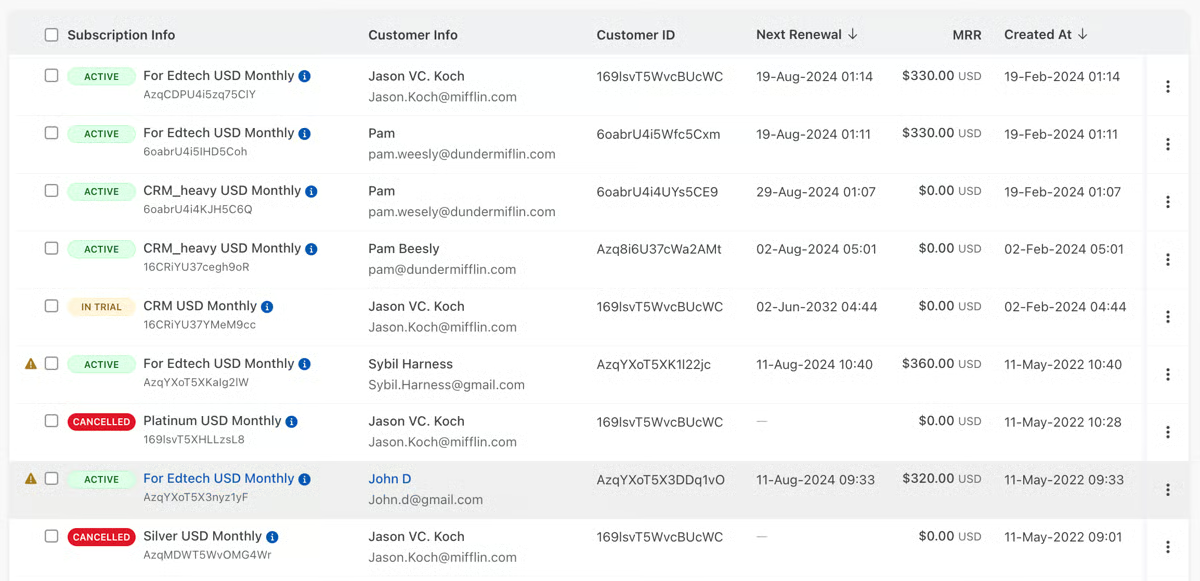
Assist is one other space the place Chargebee earns belief. Many reviewers particularly point out responsive customer support, fast difficulty decision, and useful onboarding steering. For groups implementing subscription billing for the primary time, having that degree of help makes a measurable distinction.
Some reviewers point out that customization round invoices, dashboards, or sure workflow configurations can really feel considerably restricted in contrast with extra open-ended billing methods. For SaaS corporations working below standardized subscription fashions, the construction works nicely, however organizations that want extremely tailor-made bill layouts or deeply bespoke billing workflows might need to consider how a lot customization they require. That stated, some customers discover Chargebee’s structured structure inflexible when attempting to adapt workflows rapidly, nevertheless it in the end helps keep constant subscription knowledge and steady billing logic at scale for complicated recurring income operations.
The platform additionally brings a variety of billing capabilities into one platform, from pricing configuration to automation guidelines and subscription lifecycle administration. Whereas that depth is efficacious for scaling subscription operations, a couple of reviewers notice that getting absolutely snug with the platform’s extra superior options can take time. Groups with devoted RevOps or finance possession are inclined to adapt rapidly, however organizations in search of a really light-weight, plug-and-play billing setup might encounter a studying curve through the preliminary onboarding part.
General, Chargebee stands out as a purpose-built subscription administration platform that balances flexibility, automation, and integration depth with out sacrificing usability.
What I like about Chargebee:
- It provides versatile subscription modeling that helps complicated pricing constructions, billing cycles, and mid-cycle modifications with out operational friction.
- It supplies robust automation and integrations that join billing, funds, and accounting workflows into one streamlined recurring income system.
What G2 customers like about Chargebee:
“1. Highly effective subscription and billing automation: Chargebee handles the total subscription lifecycle — trials, upgrades, downgrades, proration, renewals, and cancellations — while not having customized code or handbook workflows. This drastically reduces billing errors and saves groups a variety of time.
2. Versatile pricing and experiments: It helps a variety of pricing fashions (tiered, quantity, hybrid, usage-based) and allows you to experiment with new plans or promotions rapidly. For fast-moving SaaS companies, this agility is a big benefit.
3. Distinctive income restoration instruments: Options like good dunning, cost retries, and automatic reminders assist recuperate failed funds successfully, which might add as much as considerably saved income.“
– Chargebee assessment, Vishal R.
What I dislike about Chargebee:
- Based mostly on G2 critiques, whereas Chargebee’s structured billing structure retains subscriptions dependable at scale, groups needing heavy customization for invoices or workflows might discover it considerably limiting. It’s finest suited to SaaS companies with standardized subscription fashions.
- Customers additionally respect the platform’s depth, however mastering its superior options can take a while throughout onboarding. It is best suited to rising SaaS groups with RevOps or finance possession, moderately than for corporations in search of a easy plug-and-play billing instrument.
What G2 customers dislike about Chargebee:
“I feel for now, the priority of our members or our inner staff is the automated emails. We might prefer to see extra customization choices there. As an example, when a member transitions from a trial to cancellation, they need to obtain a particular electronic mail moderately than our standard cancellation electronic mail. It might be nice to have extra options like this, and in addition with regards to including plans or coupons, so I haven’t got to pile them up.”
– Chargebee critiques, Mercy P.
Subscription administration begins with getting your billing construction proper. Be taught how billing cycles work and find out how to set one as much as help predictable recurring income.
2. Salesforce Income Cloud: Greatest for enterprise quote-to-cash
Salesforce Income Cloud has the best influence by centralizing quoting, pricing, billing, and renewals right into a tightly related income system. This isn’t only a billing add-on; it’s an extension of Salesforce CRM, CPQ, and billing infrastructure working as one steady system.
G2 reviewers repeatedly emphasize how seamless it feels to maneuver from alternative to cite to contract to bill with out leaving Salesforce. That tight ecosystem alignment is mirrored in robust CRM & Gross sales integration scores of 92%, together with 90% satisfaction in alternative administration, based on G2 Information.
The CPQ engine is likely one of the most constantly praised capabilities. Superior product configuration, layered pricing guidelines, low cost controls, and automatic quote technology are talked about many times in critiques. Gross sales groups managing complicated product catalogs or subscription bundles spotlight how guided promoting flows scale back handbook pricing errors.
Past quoting, what makes Income Cloud highly effective is its true end-to-end quote-to-cash protection. Customers describe having the ability to handle contracting, renewals, amendments, billing, and income changes inside one unified system. As a substitute of sewing collectively separate CPQ and billing instruments, organizations can centralize income operations below one knowledge mannequin.
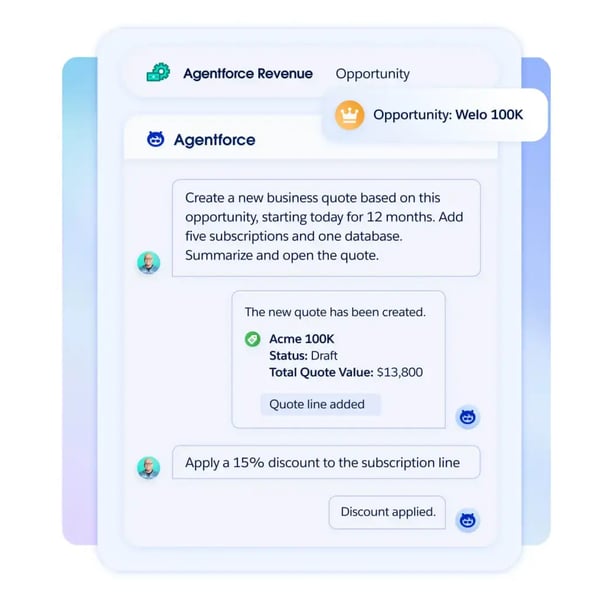
Customization is one other theme that surfaces incessantly in G2 suggestions. Groups respect the power to create complicated pricing constructions, customized approval chains, rule-based workflows, and tailor-made gross sales processes. This degree of configurability makes the platform adaptable throughout industries and world gross sales motions. Whether or not it’s enterprise SaaS subscriptions or multi-line product portfolios, reviewers constantly point out flexibility as a defining energy.
Automation additionally performs a central function. Approval routing, pricing validations, and guided workflows scale back back-and-forth between gross sales and finance. Automated controls guarantee low cost insurance policies and income logic are enforced constantly. That operational management contributes to 90% satisfaction in alternative administration and 89% so as historical past on G2, signaling robust backend reliability as soon as the system is in place.
Scalability is the place Income Cloud clearly positions itself. Many reviewers describe it as well-suited for giant gross sales groups, complicated product catalogs, and world operations. It helps layered pricing fashions, cross-sell motions, and structured renewals at scale. This isn’t a light-weight billing instrument; it’s constructed for organizations managing income throughout areas and enterprise items.
Income Cloud’s deep configurability and tight integration with the Salesforce ecosystem are a part of what make it highly effective for enterprise quote-to-cash operations. Nonetheless, a number of G2 reviewers notice that this degree of flexibility could make the preliminary implementation extra concerned, usually requiring devoted Salesforce admins, technical experience, or consulting help. Smaller organizations with out inner Salesforce possession might discover the rollout extra demanding, however enterprises with established RevOps groups are inclined to deal with this nicely.
The platform additionally combines CPQ, billing, and income automation into one unified system, which many customers see as a significant benefit for consolidating income operations. On the identical time, some reviewers point out that licensing and add-ons can add up relying on the modules and scale of deployment. For bigger enterprises already invested within the Salesforce ecosystem, the funding could make sense, however groups with tighter budgets might need to consider the general price construction fastidiously.
General, Salesforce Income Cloud feels purpose-built for enterprises that need full management over quoting, pricing, billing, and renewals contained in the Salesforce atmosphere.
What I like about Salesforce Income Cloud:
- It provides deep CRM, CPQ, and billing integration that retains the whole quote-to-cash course of related inside Salesforce.
- It supplies robust automation and pricing controls that assist enterprise gross sales groups handle complicated product configurations and approval workflows effectively.
What G2 customers like about Salesforce Income Cloud:
“Salesforce Income Cloud is the trade chief in AI-driven income administration, all the things from components and quote administration, all the way in which to billing and invoicing. It’s by far probably the most highly effective instrument available on the market that does this. Mix that with Agentforce, and also you get a top-notch answer, and there is nothing it may possibly’t deal with.”
– Salesforce Income Cloud assessment, Kevin P.
What I dislike about Salesforce Income Cloud:
- Based mostly on G2 critiques, whereas Income Cloud’s deep configurability offers enterprises robust management over quote-to-cash workflows, implementation may be complicated and should require Salesforce experience or consulting help. It’s finest suited to organizations with devoted Salesforce admins or RevOps groups.
- Customers additionally respect the platform’s broad CPQ and billing capabilities, however licensing and add-ons can add up as utilization scales. It suits higher for giant enterprises already invested within the Salesforce ecosystem.
What G2 customers dislike about Salesforce Income Cloud:
“One facet that may be difficult with Salesforce Income Cloud is that, on account of its breadth and suppleness, the preliminary setup and configuration may be complicated, particularly for corporations with very distinctive pricing or billing fashions. Customization and integration with present methods can require cautious planning and technical assets. Nonetheless, as soon as configured correctly, these challenges are outweighed by the efficiencies and insights the platform supplies.”
– Salesforce Income Cloud assessment, Davide D.
In case you’re exploring lighter billing choices earlier than investing in full subscription administration, examine free invoicing instruments that simplify cost assortment and recurring costs.
3. Paddle: Greatest for SaaS and digital items (Service provider of Document)
If promoting globally with out worrying about tax compliance sounds interesting, Paddle’s Service provider of Document mannequin is the place all the things begins. As a substitute of simply providing you with subscription billing instruments, Paddle really steps in because the service provider, dealing with funds, tax compliance, invoicing, and regulatory obligations in your behalf. That design selection reshapes how subscription administration works, particularly for SaaS corporations promoting internationally.
G2 customers constantly spotlight Paddle’s all-in-one strategy to billing, funds, subscriptions, and compliance. Reasonably than stitching collectively cost processors, tax engines, and billing methods, groups handle all the things from one dashboard. G2 Information reveals 94% satisfaction for ease of doing enterprise and 92% for probability to advocate, reinforcing how a lot customers worth this consolidated construction.
World tax compliance is one other space the place Paddle earns repeated reward. G2 reviewers incessantly point out VAT calculation, worldwide tax dealing with, and the Service provider of Document construction as main operational benefits. As a substitute of manually monitoring regional tax guidelines, Paddle automates compliance and remittance. That functionality makes enlargement into new nations far much less operationally heavy. In truth, G2 Information displays robust renewal satisfaction at 94%, suggesting confidence in its ongoing subscription reliability.
Recurring billing administration can be described as reliable and versatile. Customers discuss dealing with a number of pricing tiers, plan modifications, and billing cycles with out sophisticated backend changes. The subscription lifecycle, from sign-up to renewal, is structured in a means that reduces handbook intervention.
The interface itself is usually described as clear and simple. G2 reviewers point out having the ability to navigate subscriptions, funds, and prospects with out feeling overwhelmed. In line with G2, ease of use scores sit at 92%, reinforcing that though Paddle manages complicated world billing duties, the floor expertise stays approachable.
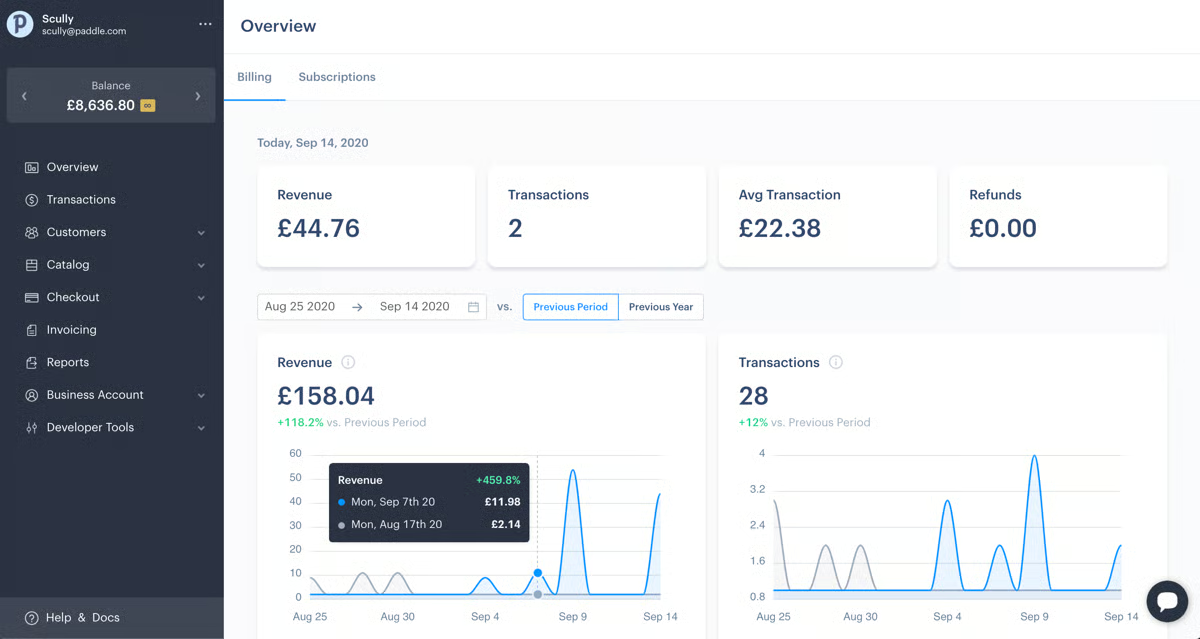
Builders additionally appear snug working with the platform. G2 suggestions incessantly highlights well-documented APIs, webhooks, and integration flexibility. Cost integration satisfaction stands at 89%, which helps the repeated mentions of clean connectivity. Whether or not embedding checkout or syncing knowledge to inner methods, reviewers describe the API layer as dependable.
Some G2 reviewers point out that Paddle’s help response occasions can sometimes stretch past 24 hours, which can really feel gradual for groups that want quick assist throughout operational points. That stated, Paddle’s help staff is usually described as educated and useful when addressing billing or compliance questions, so for SaaS corporations with much less time-sensitive wants, the steering is mostly seen as dependable and helpful.
Its reporting instruments observe an identical sample. Paddle supplies core monetary and subscription metrics that give groups clear visibility into billing efficiency, however a number of G2 reviewers point out that dashboard customization and superior analytics should not as deep as what devoted BI platforms supply. For many operational reporting, the built-in instruments are enough, although corporations needing extra complicated monetary evaluation might depend on exterior reporting options.
On the entire, Paddle feels purpose-built for SaaS corporations that need to simplify world billing with out assembling a number of methods.
What I like about Paddle:
- It provides an all-in-one Service provider of Document mannequin that handles subscriptions, funds, tax, and compliance in a single related system.
- It supplies a clear interface and developer-friendly APIs that make world recurring billing simpler to handle.
What G2 customers like about Paddle:
“Paddle may be very easy to combine and arrange. The answer comes with full and really clear documentation. I’ve handled the customer support of the answer a number of occasions by way of their on-line chat within the dashboard for numerous parts that I hadn’t essentially understood nicely; they’ve at all times been capable of meet my expectations.
We use Paddle Billing very often to handle our financial transactions. We significantly respect the truth that Paddle routinely handles the taxes (VAT) to be utilized to prospects based mostly on their nation.”
– Paddle assessment, William S.
What I dislike about Paddle:
- Based mostly on the G2 critiques I checked out, I get the sense that whereas Paddle’s help staff is educated and useful on billing and compliance questions, response occasions can sometimes exceed 24 hours. It’s usually manageable for SaaS groups with much less pressing help wants.
- I additionally observed that, though Paddle supplies clear core subscription and monetary metrics, its reporting dashboards aren’t as superior as these of devoted BI instruments. It might want exterior analytics instruments for deeper monetary evaluation, nevertheless it works nicely for operational reporting.
What G2 customers dislike about Paddle:
“The construction of subscriptions is much less versatile than Stripe, and I usually need to design my merchandise round Paddle moderately than the opposite means round. Lemon Squeezy is extra succesful but additionally dearer.”
– Paddle assessment, Teslemetry A.
4. Sage Intacct: Greatest for multi-entity monetary administration
For me, Sage Intacct begins and ends with its multi-dimensional monetary reporting. This isn’t nearly working a revenue and loss assertion; it’s about slicing monetary knowledge by division, location, undertaking, buyer, or any customized dimension you outline. In line with G2 Information, 90% of customers say it meets their necessities, and far of that confidence reveals up in how incessantly reviewers spotlight customizable studies, real-time dashboards, and deep monetary visibility. The reporting engine doesn’t really feel like an add-on; it feels just like the spine of the platform.
Beneath that reporting layer is a basic ledger that reviewers constantly describe as dependable and structured. G2 suggestions repeatedly calls out robust core accounting capabilities throughout accounts payable, accounts receivable, and monetary controls. The final ledger isn’t simply steady, it’s constructed to deal with complicated accounting logic whereas sustaining auditability. That reliability is mirrored in excessive satisfaction throughout accounting integrations, with 93% in accounting-related integration classes on G2.
Scalability is one other theme that comes up usually in G2 critiques. Sage Intacct is incessantly praised for supporting multi-entity organizations, particularly these managing a number of subsidiaries or working throughout areas. Consolidation processes are structured and centralized, which reduces handbook spreadsheet work. G2 Information reveals robust scores round consolidation and billing varieties, reinforcing its energy in structured monetary administration.
Automation performs a significant function in how groups use the system each day. Reviewers point out automated journal entries, approval workflows, and recurring accounting processes that scale back handbook workload. As a substitute of counting on handbook changes or disconnected processes, Sage Intacct centralizes these monetary workflows. Automation satisfaction scores mirror that consistency, with robust marks throughout billing varieties and monetary changes classes.
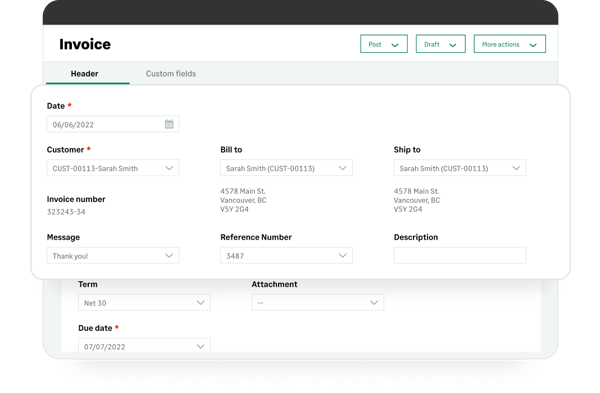
Integrations are one other pillar of the platform. Customers incessantly point out clean connectivity with CRM methods, payroll platforms, and different operational instruments. The API flexibility permits monetary knowledge to movement between departments with out repeated reconciliation. In line with G2 Information, CRM & Gross sales integration sits at 90%, reinforcing that Sage Intacct doesn’t function in isolation from income operations.
Position-based permissions and inner controls additionally floor repeatedly in critiques. Finance leaders respect the power to outline granular entry ranges, implement approval constructions, and keep compliance requirements. This structured management framework makes it simpler to handle monetary governance throughout rising groups with out compromising knowledge integrity.
Sage Intacct’s energy lies in its deep monetary structure and excessive configurability throughout reporting dimensions, entities, and workflows. Nonetheless, a number of G2 reviewers notice that this flexibility could make the preliminary implementation extra concerned, usually requiring structured onboarding, consulting help, and a big time funding throughout setup. Finance groups with devoted implementation assets often navigate this nicely, however smaller groups might need to plan for a extra structured rollout.
The platform additionally delivers enterprise-grade accounting capabilities, together with multi-entity consolidation, automation, and powerful monetary controls. That degree of depth comes with a better pricing tier, and a few G2 reviewers notice that the fee can really feel steep for smaller or early-stage companies. For rising or mid-market organizations managing complicated monetary constructions, the funding tends to align extra intently with the worth delivered.
All issues thought of, Sage Intacct feels purpose-built for finance groups that want dimensional reporting, structured automation, and powerful inner controls throughout a number of entities.
What I like about Sage Intacct:
- It provides deep multi-dimensional reporting that offers finance groups real-time visibility throughout entities, departments, and tasks.
- It supplies robust core accounting and automation capabilities that centralize the final ledger, approvals, and monetary controls.
What G2 customers like about Sage Intacct:
“It appears to me that Sage Intacct has many instruments and functionalities. We switched to Sage Intacct as a result of it has too many functionalities. Whereas some issues could also be missing, it makes up for it with many different functionalities and add-ons that the appliance has. It helps us loads within the accounting space with regards to recording, modifying, and adjusting invoices, in addition to within the automated calculation of taxes and the obtain of full studies. Moreover, the reference to different functions, like Rippling, permits us to synchronize transactions with company bank cards. I additionally worth the higher customization choice that Sage Intacct provides to create particular and detailed studies, one thing we did not have with our earlier software program, QuickBooks.”
– Sage Intacct assessment, Luis M.
What I dislike about Sage Intacct:
- A number of reviewers point out that whereas Sage Intacct’s configurability helps complicated monetary constructions, the preliminary setup may be time-intensive and should require consulting help. It tends to work finest for finance groups with assets for a structured implementation.
- Some customers additionally level out that the platform’s pricing can really feel excessive for smaller or early-stage companies. The funding usually makes extra sense for mid-market or rising organizations managing multi-entity monetary operations.
What G2 customers dislike about Sage Intacct:
“One draw back of Sage Intacct is that customization and report constructing can generally really feel complicated for brand new customers and should require further coaching. Moreover, sure superior options or integrations can improve general prices, which can be a priority for smaller groups.”
– Sage Intacct assessment, Bhavik V.
5. Maxio: Greatest for B2B SaaS billing complexity
If there’s one factor that defines Maxio for me, it’s how a lot management it offers you over subscription billing logic.
The core billing engine is the middle of gravity right here. As a substitute of forcing inflexible subscription templates, Maxio permits granular configuration throughout recurring, tiered, and usage-based pricing fashions.
Flexibility reveals up repeatedly in G2 suggestions. Customers incessantly describe the platform as extremely configurable, particularly with regards to subscription constructions, billing guidelines, and workflow controls. This isn’t surface-level customization; it’s granular billing logic that adapts to completely different contract varieties and income fashions. For SaaS groups experimenting with pricing or managing hybrid billing fashions, that configurability is usually highlighted as a differentiator.
The billing engine itself receives constant reward. G2 reviewers repeatedly name out dependable recurring billing, utilization monitoring, and structured subscription lifecycle administration. In line with G2, billing varieties satisfaction displays that energy at 83%, reinforcing that the system handles various billing constructions successfully. As a substitute of patching collectively billing add-ons, Maxio centralizes these mechanics right into a cohesive engine.
Automation is one other robust theme throughout critiques. Finance groups point out automated billing cycles, workflow triggers, and decreased handbook reconciliation work. In line with G2 Information, automation satisfaction sits at 85%, which mirrors the repeated references to effectivity beneficial properties. The power to streamline invoicing and subscription updates with out fixed oversight reduces operational drag.
Integration and API capabilities additionally stand out. Customers constantly spotlight developer-friendly APIs and the power to attach Maxio with CRM, accounting, and different operational methods. The API layer isn’t an afterthought; it’s a part of how the billing infrastructure connects into broader income operations.
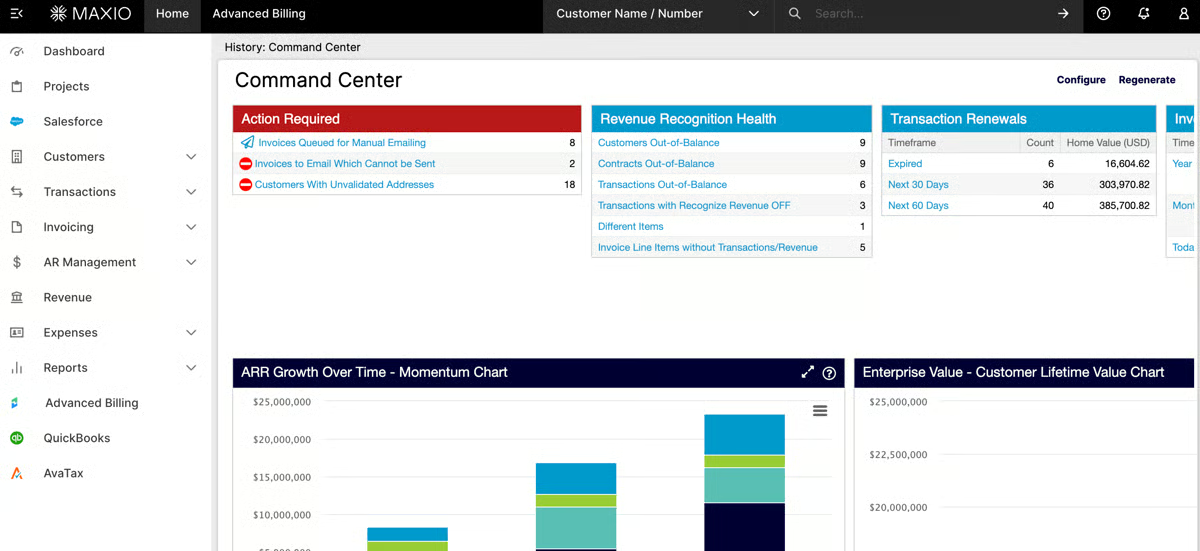
Ease of navigation comes up usually in G2 critiques as nicely. Customers describe the interface as intuitive and simple for managing subscriptions and billing workflows. G2 Information reveals ease of use at 85%, reinforcing that even with configurable billing logic, day-to-day navigation doesn’t really feel sophisticated.
Maxio supplies detailed monetary and subscription reporting that offers groups robust visibility into billing knowledge throughout accounts and income streams. Nonetheless, a number of G2 reviewers notice that configuring customized studies or extracting particular insights can take extra effort than with extra visible analytics instruments. Groups snug working with structured monetary knowledge often adapt nicely, however these anticipating extremely visible or immediately configurable dashboards might discover the reporting workflow much less intuitive.
Its invoicing system can be designed with robust billing accuracy and transaction integrity in thoughts, which helps keep consistency throughout subscription lifecycles. That structured strategy, nonetheless, signifies that modifying invoices or adjusting transactions after technology can generally really feel extra complicated. Organizations that prioritize managed, audit-friendly billing processes have a tendency to understand the construction, whereas groups that incessantly want post-generation bill edits might expertise operational friction.
Finally, Maxio feels engineered for SaaS finance groups that want configurable subscription billing, automation, and API extensibility in a single platform.
What I like about Maxio:
- It provides a extremely configurable subscription and usage-based billing engine that helps complicated SaaS pricing fashions.
- It supplies robust automation and API integrations that join billing workflows with broader income methods.
What G2 customers like about Maxio:
“I exploit Maxio for maintaining observe of all my shoppers’ invoices and subscription particulars. What I like most about Maxio is the convenience of having the ability to lookup an bill or subtask subscription actually simply whereas I am on a name with a shopper. I can assessment an bill rapidly, inside about two minutes, and entry contact info simply. The platform is very easy to make use of. The preliminary setup was very simple for me, and I might entry Maxio and assessment subscriptions and invoices from the primary day.”
– Maxio assessment, Yessie Z.
What I dislike about Maxio:
- Some reviewers point out that whereas Maxio provides detailed subscription and monetary reporting, configuring customized studies can take additional effort in contrast with extra visible analytics instruments. It tends to work finest for groups snug working with structured monetary knowledge.
- Some customers say that modifying invoices after they’re generated can really feel complicated, particularly for groups that need extra flexibility in post-billing edits. That stated, the invoicing system is constructed to prioritize billing accuracy and management, which makes it a greater match for organizations that worth strict, audit-friendly billing processes.
What G2 customers dislike about Maxio:
“Maxio nonetheless has a methods to go when it comes to reporting and course of efficiencies earlier than I might say that I’d go along with Maxio once more at my subsequent startup. Proper now, we do not imagine the worth is there for the subscription and are beginning to scope out a alternative. The shortfall on the reporting facet can’t be understated, as that is the place a lot of the perceived worth got here from after we initially joined 2+ years in the past.
Maxio not too long ago had an audit prep webinar by which they incorrectly showcased studies that don’t consolidate correctly when there are completely different currencies. I acknowledged this within the chat and was subsequently censored through the customer-facing webinar. How dangerous does that make Maxio look?! This was all recorded on my finish as nicely. I shared it internally with management, and it simply locations a lot doubt on Maxio’s future.”
– Maxio assessment, Tieg B.
6. Stripe Billing: Greatest for developer-friendly / embedded billing
Stripe Billing actually earns its popularity by pricing flexibility. In case you’re constructing tiered plans, usage-based fashions, trials, coupons, or hybrid subscription constructions, that is the place the platform feels strongest. In line with G2 Information, 94% of customers say it meets their necessities, which aligns with the frequency with which reviewers point out superior billing logic and lifecycle management. As a substitute of locking you into inflexible templates, Stripe Billing permits you to architect pricing round your product, not the opposite means round.
That flexibility is amplified by the API layer. G2 reviewers constantly spotlight clear API design, robust webhook help, and detailed documentation. The developer-first construction makes it simpler to embed subscription workflows instantly into your product expertise. Funds integration satisfaction sits at 93% on G2, reinforcing how tightly Stripe Billing connects to Stripe’s broader infrastructure. For engineering-driven groups, that technical coherence is a significant benefit.
The mixing with Stripe Funds and Checkout is one other repeated theme in G2 suggestions. Subscription billing, cost processing, and world cost strategies work collectively with out patchwork connections. Multi-currency help, tax dealing with, and worldwide transaction capabilities are constructed into the identical ecosystem.
Automation performs a big function in lowering handbook overhead. G2 reviewers incessantly point out automated bill technology, recurring billing cycles, and built-in retry makes an attempt for failed funds. Dunning workflows and subscription lifecycle automation assist maintain income predictable with out fixed monitoring.
Stripe Billing additionally scales comfortably with development. Infrastructure stability, help for worldwide currencies, and dealing with of excessive transaction volumes seem repeatedly in G2 suggestions. The centralized subscription dashboard provides visibility into buyer plans, renewals, and cost standing.
Stripe Billing supplies core subscription and income metrics instantly inside its dashboard, giving groups clear visibility into billing efficiency and buyer exercise. Nonetheless, a number of G2 reviewers point out that the out-of-the-box reporting depth can really feel restricted for extra superior monetary evaluation. Groups needing extremely custom-made income fashions or deeper analytics usually join Stripe Billing with exterior BI or reporting instruments.
The platform’s pricing construction displays the size and infrastructure behind Stripe’s world cost community. Whereas customers worth the reliability and seamless cost connectivity, some G2 reviewers notice that transaction charges and processing prices can improve as billing quantity grows. For companies prioritizing developer flexibility and world cost attain, the construction usually aligns nicely with their development wants.
Stripe Billing in the end feels engineered for groups that need full management over subscription logic, robust API extensibility, and world cost connectivity below one platform.
What I like about Stripe Billing:
- It provides extremely versatile subscription modeling with robust API help for complicated pricing, usage-based billing, and lifecycle automation.
- It supplies seamless integration with Stripe Funds and world cost strategies that maintain billing and processing tightly related.
What G2 customers like about Stripe Billing:
“Stripe offers us the power to customise how we need to current our invoices to our prospects, construction our merchandise, and settle for funds. We have been even capable of overcome a product show downside referring to how Stripe shows gadgets on our invoices by a means that wasn’t advisable by Stripe, and Stripe continued to work the way in which we wished it to anyway. The truth that we later needed to change it to benefit from a paywalled Income Recognition characteristic under no circumstances downplays the worth that Stripe offered us throughout this time by permitting us to make use of its system “incorrectly” and nonetheless perform nicely!
– Stripe Billing assessment, Frank S.
What I dislike about Stripe Billing:
- Some reviewers notice that whereas Stripe Billing supplies clear core subscription metrics, the built-in reporting isn’t as deep for superior monetary evaluation. Groups needing complicated income insights usually join it with exterior BI or analytics instruments.
- Customers additionally point out that though Stripe’s world cost infrastructure is dependable, transaction and processing charges can add up as billing quantity grows. It tends to suit finest for companies prioritizing developer flexibility and world scale.
What G2 customers dislike about Stripe Billing:
“The pricing is the principle ache level. Stripe Billing is dear, particularly for a startup like ours. The per-transaction charges and the extra share on high for billing options add up rapidly as you scale. For a corporation based mostly in a market like Mexico, the place margins may be tighter, the fee may be onerous to justify in comparison with options. I want there have been extra versatile or volume-based pricing tiers for rising startups.”
– Stripe Billing assessment, Maximiliano J.
Incessantly requested questions on subscription administration software program
Have extra questions? Discover extra solutions under.
Q1. What’s subscription administration software program?
Subscription administration software program is a platform that automates recurring billing, manages pricing plans, handles renewals, and tracks buyer subscriptions. It helps companies handle the total subscription lifecycle, from sign-up and invoicing to cost retries, upgrades, downgrades, and cancellations, whereas offering visibility into recurring income efficiency.
Q2. How does subscription administration software program work?
Subscription administration software program works by:
- Creating and managing pricing plans (tiered, usage-based, hybrid).
- Automating recurring invoices and cost processing.
- Dealing with failed funds with retry and dunning workflows.
- Managing subscription lifecycle occasions (upgrades, renewals, cancellations).
- Syncing billing knowledge with CRM, accounting, and ERP methods.
- Producing income and subscription studies.
It connects pricing logic with cost infrastructure to make sure correct, automated recurring income.
Q3. Which subscription administration software program is finest?
One of the best subscription administration software program relies on your online business mannequin:
- Chargebee: Greatest general flexibility
- Salesforce Income Cloud: Greatest for enterprise quote-to-cash
- Paddle: Greatest for SaaS and digital items (Service provider of Document)
- Sage Intacct: Greatest for multi-entity monetary management
- Maxio: Greatest for B2B SaaS billing complexity
- Stripe Billing: Greatest for developer-first embedded billing
The proper selection relies on pricing complexity, integrations, scalability, and reporting wants.
This fall. What’s the top-rated subscription administration platform for enterprises?
Salesforce Income Cloud is usually thought of a top-rated subscription administration platform for enterprises. It combines subscription billing, CPQ, and income lifecycle administration inside the Salesforce ecosystem. Enterprise groups on G2 incessantly spotlight its scalability, automation capabilities, and deep CRM integrations for managing complicated subscription fashions.
Q5. What’s the most reasonably priced subscription administration software program for SMBs?
Chargebee is widely known as an reasonably priced subscription administration platform for SMBs. G2 reviewers usually notice its versatile pricing tiers, automated billing workflows, and straightforward subscription setup. It helps small and mid-sized companies handle recurring billing, invoicing, and subscription lifecycle operations with out requiring complicated enterprise infrastructure.
Q6. What’s the finest platform for managing recurring income streams?
Stripe Billing is often used to handle recurring income streams. In line with G2 reviewers, it simplifies subscription billing, recurring invoicing, and usage-based pricing fashions. Companies worth its developer-friendly APIs and seamless integration with Stripe’s cost infrastructure for automating recurring income administration.
Q7. What platform integrates subscription administration with cost gateways?
Paddle is a subscription administration platform that integrates billing and cost processing right into a single answer. G2 customers spotlight that it handles subscription billing, funds, and world tax compliance in a single platform. This strategy helps SaaS companies handle subscriptions and cost gateways with out counting on a number of distributors.
Q8. Which subscription administration instrument provides probably the most superior buyer retention options?
Chargebee supplies superior buyer retention capabilities by instruments like dunning administration, good retries, and churn discount workflows. G2 reviewers usually point out its automation options that assist recuperate failed funds and enhance subscription renewal charges, making it helpful for companies targeted on lowering involuntary churn.
Q9. Which vendor provides analytics on subscription churn charges?
Maxio provides subscription analytics instruments that assist companies observe churn charges and income efficiency. In line with G2 critiques, its reporting dashboards present insights into subscription metrics equivalent to buyer churn, recurring income tendencies, and cohort efficiency, serving to SaaS corporations perceive subscription well being and retention patterns.
Q10. Which answer helps versatile subscription plan creation?
Chargebee helps versatile subscription plan creation by options like tiered pricing, usage-based billing, and customized subscription fashions. G2 reviewers incessantly spotlight how simply companies can experiment with completely different pricing constructions, making it appropriate for corporations that incessantly alter subscription plans.
Q11. Which instrument helps subscription administration for world audiences?
Paddle helps subscription administration for world audiences by dealing with worldwide funds, tax compliance, and forex localization. G2 customers usually spotlight its skill to handle world subscriptions with out requiring companies to construct complicated tax and compliance infrastructure themselves.
Q12. Which vendor supplies AI-powered upsell and cross-sell suggestions?
Salesforce Income Cloud helps AI-driven upsell and cross-sell alternatives by its integration with Salesforce’s broader AI and CRM capabilities. G2 reviewers usually spotlight how companies can use buyer knowledge and automation instruments inside Salesforce to determine enlargement income alternatives throughout subscription accounts.
Q13. What platform supplies automated subscription renewal notifications?
Stripe Billing permits automated subscription renewal notifications and billing alerts. In line with G2 reviewers, companies use Stripe’s billing automation to inform prospects about renewals, upcoming invoices, and cost updates, serving to scale back missed funds and keep steady subscription income.
Income runs on construction
The simplest groups I’ve seen deal with subscription administration software program as core income infrastructure, not only a billing instrument. They don’t implement it as soon as and overlook about it. They use it to check pricing, automate renewals, scale back failed funds, and keep visibility because the enterprise scales. That’s the place these platforms show their worth, not simply in sending invoices, however in supporting long-term recurring income management.
Throughout the instruments on this checklist, one theme is constant: the very best subscription administration software program balances flexibility with reliability. Whether or not you prioritize developer customization, enterprise-grade monetary governance, or world compliance protection, the aim is similar: predictable income with fewer operational bottlenecks.
As soon as billing is steady, the following step is to optimize the methods related to it.
In case you’re trying past billing to manage general SaaS prices, discover G2’s information to the 7 finest SaaS spend administration software program to see how groups observe, optimize, and scale back software program spend throughout the stack.

